Showing posts with label Review - Fiction / Historical / WWII. Show all posts
Monday, October 17, 2022

Review: The Codebreaker's Secret by Sara Ackerman

by Sara Ackerman
Release Date: August 2, 2022
2022 Mira Books
Kindle Edition; 384 Pages
ISBN: 978-0778386452
ASIN: B09GBDRSL8
Audiobook: B09PQMNGVD
Genre: Fiction / Historical / WWII
Source: Review copy from publisher
 
3.75 / 5 Stars
 
Summary
1943. As war in the Pacific rages on, Isabel Cooper and her codebreaker colleagues huddle in “the dungeon” at Station HYPO in Pearl Harbor, deciphering secrets plucked from the airwaves in a race to bring down the enemy. Isabel has only one wish: to avenge her brother’s death. But she soon finds life has other plans when she meets his best friend, a hotshot pilot with secrets of his own.

1965. Fledgling journalist Lu Freitas comes home to Hawai'i to cover the grand opening of the glamorous Mauna Kea Beach Hotel, Rockefeller's newest and grandest project. When a high-profile guest goes missing, Lu forms an unlikely alliance with an intimidating veteran photographer to unravel the mystery. The two make a shocking discovery that stirs up memories and uncovers an explosive secret from the war days. A secret that only a codebreaker can crack.
 
My Thoughts
The Codebreaker's Secret is the latest WWII novel by this author and I always look forward to her books as she usually tends to focus on aspects of war that are not as familiar to readers, on the people who played huge roles in the war effort, but didn't necessarily step foot on a battlefield and the stories are compelling. And her passion for Hawaii and its history is evident in every word she writes; I have always enjoyed learning about island life during WWII and how the people coped after the bombing of Pearl Harbor.  And while I enjoyed this story, I didn't really find it as compelling as in the past and the dual timeline affected my overall experience of the book, and not in a positive way, unfortunately.
 
First of all, both Izzy and Lu are strong female characters and I related to both of them.  I can't imagine how difficult it would have been for Izzy to break into such a world, even during times of stress, and I'm sure she would have been questioned at all times.  I did find Izzy's story the more compelling of the two but that may simply be because I preferred her story line over that of Lu's. However, the first snag I hit with this book was the reason she felt compelled to go to Hawaii, and that was to retrace her brother's footsteps before he died.  For someone so committed to her work as a codebreaker, it just seemed flimsy at best.  And to send a codebreaker who has no knowledge of the Japanese language, especially a woman, also rubbed me the wrong way. 
 
I will admit I struggled a bit with the story line, and I definitely skimmed through the 1965 ones as I didn't necessarily see a purpose to them.  The book started off rather strong and interesting, even if I didn't quite believe in the reason for Izzy to head to Hawaii, or even if it would have happened, and I teach WWII history so I do have a background in the subject.  When Izzy started retracing her brother's footsteps, I enjoyed learning about the island, but there was something that felt off about the whole thing. I can't explain it, but it just felt weird.  And I couldn't understand the purpose behind any of it either except to maybe try to give a reason for Izzy and Matteo to become closer through memories of her brother? However, I did like the inclusion of Matteo's PTSD as such things were not really discussed during that time period although many men and women were suffering from trauma due to war-related events.  
 
While I enjoyed a lot of things in this book, like reading about the work the codebreakers did during this time period, I definitely struggled with the dual time line.  It's not that it wasn't interesting learning about Rockefeller and what he was up to, but I just didn't see the point.  Personally, the story lines just felt like they didn't work together and were strung together to come up with a way to have this sort of mystery involving Izzy's friend.  It wasn't hard to figure out who did the deed and who the person became in the future and to be honest, there were parts were I became a bit bored and was looking for something to happen.  I also thought there were too many coincidences in this book. It feels like every books makes use of a dual time line today. 
 
Verdict
The Codebreaker's Secret was a bit disjointed and some of the story line didn't quite sit well with me, but the descriptions of the island during this time period are beautiful and it is still worth a read.  I definitely struggled with Izzy becoming a codebreaker, not because she is a woman, but due to her lack of knowledge of Japanese language and culture; however, I do know a lot about the topic so I can't just put that aside and go with the story.  The author is a beautiful writer and I love how she continues to write books that are unconventional during this time period which is why I will recommend this book despite some of the issues I had with it.  And I highly recommend her previous work as well. 



Monday, October 10, 2022

Review: The Librarian Spy by Madeline Martin

by Madeline Martin
Release Date: July 26, 2022
2022 Hanover Square Press
Kindle Edition; 400 Pages
ISBN: 978-1335426918
ASIN: B09CMRX8C6
Audiobook: B09SK56G8T
Genre: Fiction / Historical / WWII
Source: Review copy from publisher

3 / 5 Stars

Summary
Ava thought her job as a librarian at the Library of Congress would mean a quiet, routine existence. But an unexpected offer from the US military has brought her to Lisbon with a new mission: posing as a librarian while working undercover as a spy gathering intelligence.

Meanwhile, in occupied France, Elaine has begun an apprenticeship at a printing press run by members of the Resistance. It’s a job usually reserved for men, but in the war, those rules have been forgotten. Yet she knows that the Nazis are searching for the press and its printer in order to silence them.

As the battle in Europe rages, Ava and Elaine find themselves connecting through coded messages and discovering hope in the face of war.
 
My Thoughts
The Librarian Spy was an interesting story told from the perspectives of two women, one gathering intelligence in Lisbon, and the other becoming more involved in the Resistance after the disappearance of her husband.  I thought the author did a good job showing the different lives of the two women as they worked to bring down the Nazi machine, and I thought the contrasting perspectives, one starving while one has plenty of food, was extremely well-written.  And as there are not a lot of stories focusing on women in Lisbon during this time period, having a story set in neutral Lisbon is always welcome. However, I did feel like Ava's story lost its strength as the story progressed, and I actually preferred Elaine's story line.  
 
First of all, I did enjoy the character development of both these women, but I will admit that I think Elaine's development was much stronger. However, I must qualify this by saying that character development is not one of the strengths of this book, and it was sometimes hard to distinguish between the two women, so when I say I enjoyed their growth it means they went from being completely naive to at least having some semblance of common sense. Elaine was actually the worse one of the two in the beginning, having little to no knowledge of the Resistance and how much was involved, especially considering how many people in her life were involved.  And to be honest, she was a bit entitled and selfish, only caring about her husband and what was happening to him, often asking people to put their lives on the line without really understanding what that meant. In short, I could have done without the melodrama. I just wanted to smack her at times, but I also wanted to smack those around her for not really making her understand the danger she was in as well as those people with which she was now involved.  It took quite a while for her to really realize how dangerous things were around her and the awful situations from which people had escaped.  And then she goes against orders to do something dangerous, and while it worked out for her and what she was hoping to accomplish, it put everyone else in danger.  And though I still didn't fully like her in the end, I did admire her for her courage, and her work ethic, even if some of it was foolish.

I did have high hopes for the Ava story line; and although I liked her character, I did feel like there wasn't as much growth involved. It amazes me that the US Military would send people with so little information or so little training to do a job like this.  I liked the contrast of Lisbon to Lyon as it really makes it clear how much the people in France are suffering, although there were some moments that showed how challenging it was for people in Lisbon as well.  I did think it didn't quite go far enough to explain the difficulties in Lisbon and instead of focusing on Ava's growth as a spy, it seemed to focus more on her being rescued all of the time by a mysterious stranger, naturally a man.  If the US Military didn't have a problem sending Ava to Lisbon, I would imagine she would have some skills or be capable of learning some espionage on her own, but that was kind of glossed over.

Which leads me to the plot. The author covers a lot of material in this book, jumping back and forth between Lyon and Lisbon. To be honest, I think this was one of the weaknesses as there was enough material here to have two separate books as Lyon, gosh, the story there is awful to begin with, a lot of which was overlooked.  And the human suffering in Lisbon was glossed over as well, except for a couple of incidents, while the author focused more on the glamorous part of the espionage, a world in which our heroine was totally out of her depth.  The overall impact of the story was lessened because of this.  I should have been horrified by the events in Lyon as I know what the 'butcher' did to the Resistance fighters there, but I wasn't. 

Verdict
The Librarian Spy had plenty of action, and there were a lot of moments that I enjoyed, but it was also full of cliches and melodrama, something I could have done without. I did appreciate the amount of research that went into this book, and could feel the hunger and despair of the people during this time period, especially in Lyon, but I don't think the author went deep enough to describe the fear in Lyon during the reign of the 'butcher', nor do I think it was complex enough.  To be honest, I think I was expecting more depth to the characters and to the story, but in reality there is nothing that really made it  stand out in a field that is completely saturated with this type of work. 


Sunday, October 9, 2022

Review: The Paris Showroom by Juliet Blackwell

by Julie Blackwell
Release Date: April 19, 2022
2022 Berkley Books
Kindle Edition; 416 Pages
ISBN: 978-0593097878
ASIN: B099VYXDMT
Audiobook: B09B82NCNB
Genre: Fiction / Historical / WWII
Source: Review copy from publisher

3.75 / 5 Stars

Summary
Capucine Benoit works alongside her father to produce fans of rare feathers, beads, and intricate pleating for the haute couture fashion houses. But after the Germans invade Paris in June 1940, Capucine and her father must focus on mere survival—until they are betrayed to the secret police and arrested for his political beliefs. When Capucine saves herself from deportation to Auschwitz by highlighting her connections to Parisian design houses, she is sent to a little-known prison camp located in the heart of Paris, within the Lévitan department store.

Capucine’s estranged daughter, Mathilde, remains in the care of her conservative paternal grandparents, who are prospering under the Nazi occupation. But after her mother is arrested and then a childhood friend goes missing, the usually obedient Mathilde finds herself drawn into the shadowy world of Paris’s Résistance fighters. 
 
My Thoughts
The Paris Showroom was a fascinating look at the not-so-well known prison camp located in the middle of Paris, where prisoners worked extremely long hours sorting out furniture, works of art, and other paraphernalia confiscated from the homes of those who were arrested and sent to concentration camps. Knowing that prisoners were kept in Paris, I am glad to see the spotlight put on those people who were forced to work countless hours sorting plundered items, often recognizing items from friends and family, helpless to do much about it.  Furthermore, the prisoners were requested to clean and repair the items so they could be sold to German soldiers to furnish their confiscated apartments while in Paris. 
 
The story alternated between Capucine and Mathilde's POV, and while I enjoyed both of them, I did prefer Capucine's simply because I was fascinated by the inner workings of the Lévitan prison camp while Mathilde's story led her in the direction of the resistance network in Paris, something with which I was much more familiar.  
 
Capucine has quite the backstory, and she is quite the character.  A wild and free spirit who embraced the liberties of the 1920s and 1930s, she was definitely unconventional, preferring the night clubs, jazz bars, and artistic pursuits that were available during this time period, but all of this came at a great cost as she lost her precious daughter to her prim and conventional in-laws who didn't approve of her behaviour.  She has an intense love affair an American jazz pianist during this time period, but refuses to marry him, but you figure it out easily enough when she gets arrested although it takes a long time for it to be said on the page.  I did have a hard time putting the Capucine who worked in the concentration camp together with the free-spirited one, as they were so different.  The war has definitely broken more than one spirit, and you can see how much of an affect it has on Capucine as she reflects on her earlier days and more carefree ways.  I did like the way she encouraged the prisoners to rebel however, in their own ways, and I found it interesting to learn about the many ways prisoners would go about trying to sabotage things and protect things the Nazis tried to destroy. 
 
I really enjoyed Mathilde's character development, but I have to say that I did not like her at all for the first two-thirds of the book.  Reflecting the conservative views of the grand-parents who raised her, you got to see the other side of the affect of Nazi occupation in Paris during this time period; the focus was on those who got wealthy by helping the Nazis, and their subsequent falls from grace when the war ended.  Mathilde was quite naive in the beginning, but as she learned, she grew on me.  And she soon learned that her grand-parents' viewpoints did not necessarily have to be hers.
 
As much as I enjoyed learning about the showroom concentration camp and the intertwining lives of Capucine and Mathilde, I did feel like the plot lost focus and there was a lack of real drive / purpose to the story.  There were times when the story fell flat, or relied on coincidence to further a plot point, something of which I am not a fan, no matter how well-written or how beautifully descriptive the scene may have been.  And while I love good resolutions to books, when you learn about the relationship between Capucine and her new husband, and the fact they are returning to the United States to live, there was a small part of me that wondered how that was going to work out.
 
Verdict
The Paris Showroom was a very enjoyable book, and I loved learning about the fans and the artistry that went into them as I don't think I've ever given it a thought before.  I was glad the focus was on the department store concentration camps as there aren't too many books that mention them, so I was fascinated by the men and women who laboured and suffered there for years, with few people knowing they were there.  The character development in this book was good, although I'm not sure a reconciliation subplot was needed here, and I did think the plot fell flat at times, and sort of meandered around. That being said, if you are interesting in learning more about the Paris prison camps, this book may be of interest to you.

Saturday, March 5, 2022

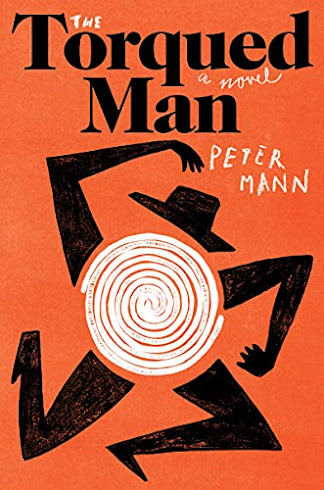
Review: The Torqued Man by Peter Mann

by Peter Mann
Release Date: January 11, 2022
2022 Harper
Kindle Edition; 384 Pages
ISBN: 978-0063072106
ASIN: B09294LKBQ
Audiobook: B095PYQV79
Genre: Fiction / Historical / WWII
Source: Review copy from publisher

3.75 / 5 Stars

Summary
Berlin--September, 1945. Two manuscripts are found in rubble, each one narrating conflicting versions of the life of an Irish spy during the war.

One of them is the journal of a German military intelligence officer and an anti-Nazi cowed into silence named Adrian de Groot, charting his relationship with his agent, friend, and sometimes lover, an Irishman named Frank Pike. Meanwhile, the other manuscript gives a very different account of the Irishman's doings in the Reich. 

The two manuscripts spiral around each other, leaving only the reader to know the full truth of Pike and De Groot's relationship, their ultimate loyalties, and their efforts to resist the fascist reality in which they are caught.
 
My Thoughts
The Torqued Man had an interesting concept, which I really liked. Tell the same story from two different perspectives and let the reader try to figure out what was really going on during a time of espionage, manipulations, double crossings, and war. I've always liked the journalistic style of storytelling, which is the approach taken in this book, so I thought it would be interesting to be led around by the nose, so to speak, and try to figure out what was really happening. And while there were a couple of things that did catch me off guard, and I really wanted to fully immerse myself in the story, there was something off about the way it was written that didn't make me feel empathetic towards the characters or allow me to get fully involved in the lives of these people.
 
First of all, the book was well-written, a mix between historical fiction and political thriller, but it did feel sluggish at times.  I don't usually tend to mind when books move slowly, especially historical fiction, as it gives me a chance to really absorb the atmosphere of the time period and what was happening.  However, some of the sluggish points were on things that I don't think were really necessary to the story, and I will admit I put the book down to read something else for a while before picking it back up again.  The dual POV can be useful or it can create problems in a book, and for me, I think it affected the suspense / tension in the story line; however, the fact the story lines weren't aligned was not an issue and I actually thought that was fascinating. I started realizing quite early on not to take anything literally and understood that every action would have another side of the story that would be quite different. I got to the point where I stopped trusting anything I read and wondering what was really going on.
 
I really enjoyed Piked as a main character and thought De Groot was quite annoying.  Pike was rough around the edges and could be quite crass, but I found him to be a lot more interesting while Adrian spend his time whining about socialism. This was definitely the author's intention, to give us these two characters, one who spent time in a Spanish prison cell, and the other, a German official, whose job was to oversee Pike, who does not see himself as working for Hitler, but still works for the Nazis in Nazi Germany and has all the comforts that that entails. Nobody could be trusted as you just didn't know if anyone was a spy or what their purpose was in being there.  Unfortunately, I felt like there was so much subterfuge going on that the story got sluggish, and I just didn't empathize with any of the characters towards the end of the story. 

Verdict
The Torqued Man had an interesting concept, and I liked the dual story line as they overlapped each other so you got both sides of the same story which made you wonder exactly which one was true, or what exactly was going on.  However, these same story lines also took away from the suspense and bogged down the story, plus they made me less empathetic towards the characters.  I had no issue understanding the story, but I do wonder if someone who is not familiar with WWII time lines might struggle with the somewhat out of sync story lines.  I was also disappointed with the ending as it just didn't feel satisfying; I think maybe I wanted more of a confrontation? A good lesson here though: There is always another side to the story. 


Sunday, August 8, 2021

Review: Sisters of the Resistance by Christine Wells

by Christine Wells
Release Date: June 8, 2021
2021 William Morrow Paperbacks
Kindle Edition; 416 Pages
ISBN: 978-0063055445
ASIN: B08K91S244
Audiobook: B08P2DVLLG
Genre: Fiction / Historical / WWII
Source: Review copy from publisher
 
3.75 / 5
 
Summary
France, 1944: The Nazis still occupy Paris, and twenty-five-year-old Gabby Foucher hates these enemies, though, as the concierge of ten rue Royale, she makes it a point to avoid trouble, unlike her sister Yvette. Until she, like her sister, is recruited into the Resistance by Catherine Dior—sister of the fashion designer, Christian Dior.

Gabby and Yvette are both swept into the world of spies, fugitives, and Resistance workers, and it doesn't take long for the sisters to realize that their lives are in danger.
 
My Thoughts
Sisters of the Resistance intrigued me as I was interested in reading more about Catherine Dior and the spy network she ran during WWII.  While I know there is not a lot of information about her activities, or at least any information that is available to the public, this is a fiction novel and it sounded like the author has created a story about her life, her arrest, her time in the camps, and what happened afterwards, all based on the information that is available.  However, that is not what this novel is all about. I have a huge problem with marketing techniques that lure you in thinking the novel is going to be about one thing and then you discover that person is only a secondary character which actually puts me right off.  I've been seeing this more and more lately, especially in WWII fiction, and I am at the point where I would prefer to read non-fiction as at least I know what I am getting into.
 
The author usually doesn't have control over marketing tactics, so once I realized Catherine Dior played only a minor role, I actually did enjoy the novel.  Yvette and Gabby were interesting characters and I thought they developed quite a bit throughout the story.  Yvette is the one who drove me crazy at first as her actions put so many people in jeopardy through her naivety and her thoughtlessness.  She just couldn't seem to understand that ignoring people's advice put a lot more than just herself in danger and I just wanted to smack her sometimes.  And I just couldn't understand why Yvette would not read letters from home? Especially when you learn the reason for why she had to leave home. Didn't make sense. Gabby was much more level-headed, although I will admit I am not sure of her motivations as I don't think the author was very clear about that and maybe could have developed that a bit more.  She was milder, always putting others before her own needs and I loved seeing her grow into someone who took control of her life and realized she had needs that were just as important as everyone else's.  The interactions between the two sisters was intriguing as well, especially during times of stress and danger.  I would have loved to learn more about their mother though as I felt she just got shunted into the background, but as we learn, Maman knew about everything that was going on so I wanted to know how and when she found out.

The story was told through both Yvette and Gabby's viewpoints, and through two timelines, 1944 and 1947. I found the shift between characters and timelines was pretty good, although I preferred the 1947 one better simply because so many books don't deal with the aftermath as much. And while this one dealt with Yvette's return to France and huge sensational trial, I still don't think it went deeply enough into how troubled things were in France during the years after the war and how much people still struggled to deal with the knowledge of the camps, the betrayals, the shortage of food, and so much more.  There was a mention of the world entering the Cold War which I did appreciate, and how things were going to get dicey and much more difficult, but in a different way.  And I really liked how Yvette was going to play a role in that new warfare; it almost seemed like there might be another book coming. 

The writing style was good and the author really tried to show how tenacious and strong people had to be during this time period.  One didn't know whom to trust, whom to depend on, and the wrong word to the wrong person could land you in a prison being tortured for weeks on end.  The level of fear was palpable and I liked how the author showed how resilient the characters could be during these tough times, doing whatever they could to resist in their own unique ways.  I did feel like Yvette's story line was stronger though, and wished that the book had been developed around her; her story line was just so much more interesting.

Verdict
Sisters of the Resistance was an interesting story about two sisters who took two different paths to resistance during WWII. I did think Yvette's story line was the stronger of the two and wished the book had been written about her.  I also thought the marketing was misleading as Catherine Dior was a secondary character and although we learn about her fate, that's all we really learn.  I did think building a novel around the fashion industry was fascinating and I liked learning how the fashion greats kept their business in Paris during this time period.  Overall, I did enjoy the book, and I look forward to seeing what it coming next from this author. 


Saturday, February 27, 2021

Review: The Paris Library by Janet Skeslien Charles

by Janet Skeslien Charles
Release Date: February 9th 2021
2021 Aria Books
Kindle Edition: 368 Pages
ISBN: 978-1982134198
ASIN: B07Z45K1Q8
Genre: Fiction / Historical / WWII
Source: Review copy from publisher

3.5 / 5 Stars

Summary
Paris, 1939: Young and ambitious Odile Souchet has it all: her handsome police officer beau and a dream job at the American Library in Paris. When the Nazis march into Paris, Odile stands to lose everything she holds dear, including her beloved library. Together with her fellow librarians, Odile joins the Resistance with the best weapons she has: books. But when the war finally ends, instead of freedom, Odile tastes the bitter sting of unspeakable betrayal.

Montana, 1983: Lily is a lonely teenager looking for adventure in small-town Montana. Her interest is piqued by her solitary, elderly neighbor. As Lily uncovers more about her neighbor’s mysterious past, she finds that they share a love of language, the same longings, and the same intense jealousy, never suspecting that a dark secret from the past connects them.
 
My Thoughts
The Paris Library was an interesting book and I definitely appreciated the amount of research that went into telling this story.  As a huge bibliophile myself, I loved that this World War II story focused on the librarians in Paris during this war and the efforts they took to ensure that people had something to read during this time period.  However, I am not sure if the author really went far enough in her telling as the book seemed to fall back on what so many of these books tend to do today, get wrapped up in the silly romance that really should have played a secondary role in this story.  I am getting so tired of these tropes; why can't the story just stand on its own?  
 
First of all, the story.  I really enjoyed the story set in 1939 and thought it was definitely the better of the two.  There seems to be a thing for dual / multiple story lines lately, and while I am not usually opposed to them, I am getting really tired of those that really have nothing to do with the story, and I think that this story could have stood on its own if it had just been set during WWII.  There was so much richness to the story of these brave librarians working at the American Library in Paris and so much to tell about the risks they took that I was much more absorbed in their story than the one in 1983 which I thought added absolutely nothing to do the story other than to give us a glimpse as to how Odile fared later on in life, which could have been done in an epilogue.  
 
What happened instead, for me, was a disruption that I didn't really appreciate, one which I felt took away from the original story including the emotional impact.  It also left me feeling much more sympathy for the characters around Odile rather than for Odile whom I thought was spoiled, selfish, and incredibly naive considering the time period in which she lived and the fact that she had a police commander for a father.  There were periods in the story in which I actively disliked her; the way she treated her friends, such as Margaret and her brother's fiance, were abominable, and one of these instances of betrayal created a very dangerous situation for her friend, one that I thought was unforgivable, even though the book goes on about how everyone should be forgiven for things they did.  No, there are some things that should never be forgiven. Sorry!!! And every time something happens, she reacts like a child and runs away.  Irritating as hell.  This girl is in the middle of the war, people are disappearing all around her, and she thinks her words won't have serious consequences?  Ones that won't last for the rest of her life? 

What I truly loved about this book was the meticulous research that went into it.  I loved the descriptions of the food, the desperation, the hunger, the grief, and the hope that went into everything these characters did.  The author was brilliant in her writing as she evoked a time period that was incredibly stressful, dangerous, and so awful for the French people, but also instilled this feeling of hope and resilience.  So much of the stories of others were hinted at and you had to read between the lines to understand what was happening and I loved how the author wrote about it rather than go and on through descriptive prose.  It was definitely much more interesting to read about the war than about the doings in 1983 as I wasn't particularly interested in that story line. 
 
Verdict
The Paris Library is a good story about betrayal, loss, friendship, family, and books, but it is also about growing up and realizing that the people around you were not quite the people you thought they were, and you were also not quite the person you wanted to be, which resulted in pain, loss, and betrayal.   I loved learning about the library and the lengths the librarians went to in order to save the books and preserve literature for the future; I just wish more focus had been on the lives of these people and less on the 'romance' and I definitely feel the dual timeline was not successful.  I am in the minority on this one though, so I encourage you to read this book for yourself to see what you think and I do recommend it for its great descriptions of Parisian life during the war. 


Thursday, July 30, 2020

Review: The Prisoner's Wife by Maggie Brooks

by Maggie Brooks
Release Date: May 26th 2020
2020 Berkley Books
Kindle Edition; 400 Pages
ISBN: 978-0593197752
ASIN: B09191G4GJ
Genre: Fiction / Historical / WWII
Source: Review copy from publisher

3 / 5 Stars

Summary
In the dead of night, a Czech farm girl and a British soldier travel through the countryside. Izabela and prisoner of war Bill have secretly married and are on the run, with Izzy dressed as a man. The young husband and wife evade capture for as long as possible--until they are cornered by Nazi soldiers with tracking dogs.

Izzy's disguise works. The couple are assumed to be escaped British soldiers and transported to a POW camp. However, their ordeal has just begun, as they face appalling living conditions and the constant fear of Izzy's exposure. But in the midst of danger and deprivation comes hope, for the young couple are befriended by a small group of fellow prisoners. These men become their new family, willing to jeopardize their lives to save Izzy from being discovered and shot.

My Thoughts
The Prisoner's Wife is one of those books that I thought would be really interesting as I had the belief it was based on a true story; however, the story was based on a supposed true story with no facts, names, places, or anything to really back it up so really, it was based on an idea given to the author on hearsay and is a bit misleading in its description.  While the author did do a lot of great and interesting research for this book, something that I really enjoyed, I was not a fan of the main character and the accompanying marketing material put way too much emphasis on this being based on a true story, which is misleading.

First of all, the author did very meticulous research for this novel and definitely appreciated that.  Because of this, the long march during the last third of the novel was probably my favourite part as it gave very good descriptions of the suffering the men faced during this terrible time period.  The author was able to capture the suffering and the misery of the soldiers as well as the fear they faced during their tribulations.  There are not as many books written about this episode, focusing more on the Auschwitz death march, so it was nice to see a book focusing on some of the other marches that happened as well.

There were some complex, interesting characters in this book.  I really took a liking to Ralph, Max, and Scotty, and enjoyed learning about their backgrounds and how they ended up where they did.  However, I was not a fan of the main character, Izzy, and this is probably why I gave the book the rating that I did.  For a woman growing up in occupied Czechoslovakia, she was incredibly naive about a lot of things, and did some really stupid things.  Running away to get married, hoping her father and her brother would just magically find her has got to be one of the dumbest things in this book.  For a girl who lived under German occupation for over six years, she would have known exactly what she would have been facing.  She was twenty years old, not six.  And her behaviour was all over the place, flying into a rage because her new husband had sexual relations before they were married? That whole conversation actually made me uncomfortable with the underlying preachy tones that accompanied it. And the author tried to make Izzy sound innocent but it actually made her seem stupid at times. You just have to read the book to see what I mean. 

The plot itself moved rather quickly, and for the most part was enjoyable.  Like I said, I did not like Izzy as a character and had to grit my teeth a few times during the book.  And I have never been, and will never be, a fan of instalust/love.  And while the marketing says this doesn't happen, yes, it does. However, the author has a gripping writing style which I enjoyed, and once I got past the Izzy-ness, I thought the descriptions of the POW camp and the work camps were really intriguing.  I would have actually like to have read more about the British POW camp. 

Verdict
The Prisoner's Wife was actually an enjoyable book, but I was not a fan of the main character.  I thought she was annoying and though the author was trying to make her seem fiery and wilful, she came across as childish and silly half the time.  I did like how the author handled the multiple POVS as well the descriptions of the various POW camps and work camps though, and thought she did a great job at showing the suffering and misery, as well as the lives, of the prisoners.  I would definitely read another book by this author, and yes, I would recommend this book.  Other readers may connect and empathize with Izzy in a way I couldn't.