Showing posts with label Review - Fiction / Historical. Show all posts
Wednesday, June 24, 2026

Review: The Lost Book of Elizabeth Barton by Jennifer N. Brown

by Jennifer N. Brown
Release Date: April 14, 2026
2026 St. Martin's Press
Ebook ARC; 320 Pages
ISBN: 978-1250383594
ASIN: B0F5PCC13S
Audiobook: B0G5HK7F63
Genre: Fiction / Historical / Tudor England
Source: Review copy from publisher
 
3 / 5 Stars
 
Summary
Historian Alison Sage has made a groundbreaking archival discovery―she found a manuscript containing the prophecies of a 16th century nun, Elizabeth Barton. Barton’s prophecy condemning Henry VIII and Anne Boleyn led to her execution and the destruction of all copies of her prophecies―or so the world believed.

With Alison’s discovery, she is catapulted to academic superstardom and scores an invitation to the exclusive Codex Consortium, a week of research among a select handful of fellow historians at a crumbling manor in England, located next to the ruins of the priory where Elizabeth herself once lived.

Alison’s cutthroat world of academia is almost as dangerous as Elizabeth Barton’s sixteenth-century England, where heretics are beheaded, visions can kill, and knowing who to trust is a deadly art. The Lost Book of Elizabeth Barton is a thrilling novel, crackling with the voices of the past and propelled by a mystery that will leave readers in suspense until the very last page.
 
My Thoughts
The Lost Book of Elizabeth Barton features the story of Elizabeth Barton who was a 16th century prophet who was eventually hanged at the age of 28 due to her conflict with King Henry VIII.  This book blends historical fiction, a mystery, a thriller, and a typed of locked-room thriller told through two distinct time lines, but I definitely felt like Elizabeth's voice was not really heard in her time line and couldn't really connect with her character.  
 
The first time line deals with Elizabeth Barton, from her life of servitude when she had her first vision to her eventual torture and death.  Told through a couple of POVs, I thought Elizabeth's was actually the weakest as she came across as confused half the time and although I think the author was trying to showcase how the men around her manipulated her into saying and doing things they wanted her to say and do, I don't think it came across very well, especially in the second half of the book.  Considering these men had to deal with King Henry VIII on a regular basis, I think they would have been far more subtle in their dealings with Elizabeth as they would know the end game if they were not careful.  Taking into account Elizabeth's lack of education, something that was mentioned a multitude of times, it is entirely possible she didn't listen to advice, especially as her fame grew, and she thought she would be protected by that, something that didn't really come through the pages very well.  There was a hint of her recklessness at times, and I did think that was more realistic, but I don't think it was because she wasn't counseled otherwise. Considering the circle who surrounded her, she would have been aware of the beheadings as well as the powerful people who had fallen under Henry VIII's axe by this point. She would have been cautioned to be careful and this wasn't highlighted enough.  I do believe she was manipulated and used politically as the events surrounding Henry VIII's marriage to Anne Boleyn were quite politically charged and the men surrounding the throne would have used whatever they could to either support or destroy the throne. Because she didn't grow up around the court, she didn't have the wisdom or the wiles to manoeuvre and play such dangerous games.
 
The second time line dealt with the present when the MC finds a journal supposedly written by Elizabeth Barton (no such thing has currently been found BTW), and embellished her advisor Edward Bocking (another real-life person from Elizabeth's circle). I enjoyed this time line for perhaps the first half of the book until it descended into a silly romance-type thing in the second half.  I am not a fan of romance, but can handle it if it's subtle and done well, but this was so annoying and I couldn't help rolling my eyes.  And while I also love mysteries and read a lot of them, this also descended into silliness.  I didn't enjoy the connection to Elizabeth Barton and the abbey and wished the author had just focused on that mystery as that was quite enjoyable.  While I don't mind the blending of multiple genres in a novel, they didn't quite work in this book and it ended up being distracting, to the point where something I was enjoying reading became something I just wanted to finish.  And that ending? Oh, yeah, there wasn't really one as it just ended.
 
Verdict
The Lost Book of Elizabeth Barton had some enjoyable moments to it and I did enjoy the mystery for the first half of the book.  It did lose me completely in the second half of the book as it descended into a murder mystery that really felt like it was pushing the boundaries of credibility. I did enjoy Elizabeth's story much more and wish the author had fleshed out Elizabeth's character quite beyond the one-dimensional person we saw in these pages and really showed the manipulation and political struggles that would have gone on during this time period as tensions were extremely high and things were quite dangerous.  The book was well-researched however, and I think readers will enjoy the descriptions of both time periods.  



Sunday, July 27, 2025

Review: The One and Only Vivian Stone by Melissa O'Connor

by Melissa O'Connor
Release Date: July 22, 2025
2025 Gallery Books
Ebook ARC; 368 Pages
ISBN; 978-1668074831
ASIN: B0DHV4MQJS
Audiobook: B0DYQDZGXD
Genre: Fiction / Historical 
Source: Review copy from publisher
 
4 / 5 Stars
 
Summary
After her grandmother’s death, thirty-something Margot DuBois prepares to sell the house quickly so she can go back to her predictable life in Santa Barbara. But while cleaning out the attic, she comes across eight unlabeled cassette tapes. Unable to use the damaged tape player, she calls in a favor from Leo—her first love and first epic heartbreak—and they strike a deal: he’ll fix the player if he can hear what’s on the tapes. When they manage to listen, the two are shocked to hear the voice of comedic legend Vivian Stone. Why did she record these tapes and how did Margot’s grandmother get them?

Between listening to Vivian recount everything from her forbidden love for Hollywood’s leading actor, to working under a misogynistic exec, to her chemistry with her costar-turned-husband on TV, Margot and Leo fall down a memory lane of their own. Margot is inspired by Vivian’s tenacity and courage to keep fighting for the life she wants, but everything changes when Vivian reveals a secret from her past in this moving exploration of how it’s never too late to start over.
 
 
My Thoughts
The One and Only Vivian Stone is one of those books that surprised me by the emotional impact it had on me while I was reading. I wasn't expecting to become as involved in Vivian's life as I did and I really rooted for her as her story unfolded. I'm still not a fan of the dual-timelines and I personally did not like Margot's story in the present, but I thoroughly enjoyed Vivian's story and wanted to know more after the tapes concluded.  
 
The strength of this book for me was definitely Vivian's character development. She went from a naive ingenue to someone who realized her worth in comedic acting, but needed to learn her strengths and weaknesses as she took on more demanding acting roles. I loved how she really wanted to be a dramatic actress and went through the withdrawal of realizing she just wasn't capable of pulling off roles like that only to realize her worth as a comedic actress and how those roles were just as important. 
 
Vivian was a remarkably complex person who struggled with the ambitious side to her personality with the woman who wanted love and a family. Like I've mentioned, she was ambitious and strong-willed, but she was also vulnerable and quite loyal to her friends and family. I don't even think I realized how skillfully the author created a more polished mature version of Vivian as she became successful in Hollywood from the naive woman in her earlier years.  I was also impressed with the way Vivian's romantic relationships were developed as we saw one that was more shallow in nature and one that was more in-depth. Both relationships were well-done and I appreciated how a person can love two people in a different way, one from a place of healing and one from a place of friendship.  When one became toxic, it was still done with respect and understanding, coming from a traumatic place in Vivian's past. 
 
I wasn't overly impressed with Margot's character arc, but it could simply be there was not enough time given to her to really develop her character the way Vivian's was developed. I just did not emphasize with her situation and I found her defensive all of the time.  
 
The plot wound itself around the characters and their development, but it was quite deceptive in nature. It dealt with a lot of serious themes such as sexual harassment in Hollywood, the misogyny that existed, and the control over actors' lives. The meticulous research that went into this book highlighted the difficulty of actors when they were bound to contracts with studios and literally had no personal rights and were told who to date and if they could even have children. It even delves into the topic of the drug abuse and how the actors were forced to take uppers/downers, diet pills, etc...Women's lack of control as well as lack of contribution to screen writing and directing was also a big theme running through the book. 
 
Verdict
The One and Only Vivian Stone was a very surprising and fascinating book. I think the author tried to honour the glamour of Hollywood, but also wanted to highlight the difficulties of being a star during the 1950s and how much the glamour actually hid. Actors didn't have freedom to do their own thing and were always afraid of losing their contracts, and the complexities of navigating the harassment during this time period for women were done delicately, but didn't downplay the seriousness of what was happening.  I did think the end of the story was a bit disappointing however, and didn't quite fit with the rest of the story. I also thought Margot's story felt more like something the author threw in as a way to tell Vivian's story; therefore, I do feel like this book didn't really need the dual timeline. 


Saturday, February 19, 2022

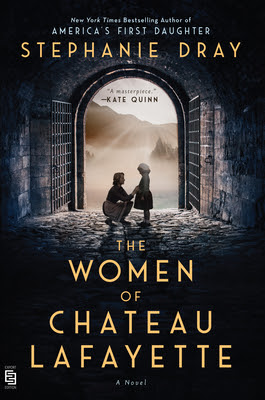
Review: The Women of Chateau Lafayette

by Stephanie Dray
Release Date: March 30, 2021
2021 Berkley Books
Kindle Edition; 576 Pages
ISBN: 978-0593335932
ASIN: B08CD24WW8
Audiobook: B08CY9R6W7
Genre: Fiction / Historical
Source: Review copy from publisher

4 / 5 Stars

Summary
A founding mother...
1774. Gently-bred noblewoman Adrienne Lafayette becomes her husband, the Marquis de Lafayette's political partner in the fight for American independence.

A daring visionary...

1914. Glittering New York socialite Beatrice Chanler is a force of nature, daunted by nothing--not her humble beginnings, her crumbling marriage, or the outbreak of war. 

A reluctant resistor...

1940.As the realities of Nazi occupation transform her life in the isolated castle where she came of age, she makes a discovery that calls into question who she is, and more importantly, who she is willing to become.
 
My Thoughts
The Women of Chateau Lafayette was an absorbing book that I thoroughly enjoyed.  I am not typically a fan of the multiple time lines as they are used in so many historical fiction books today simply because I tend to enjoy one much more than the others and wish the author would focus on that one. And while I definitely loved Adrienne's story the best of the three, the other two story lines were fascinating in their own way, even if they weren't quite as absorbing for me.
 
Adrienne's story line was my favourite, but one of my interests in uni was the French Revolution (the other being the Roman Empire), so anything to do with Lafayette tends to draw my interest.  I loved the focus on the women and how they dealt with the political side of things and I thought the author did a great job trying to show how Adrienne's family manoeuvred the political ups and downs in France during this time period.  This would have been so tricky to do as so much was going on.  I have a pretty solid knowledge of who was who however, but I do think it could be challenging for those who have little knowledge to really understand who had political power during this time period and to keep everyone straight.  I applaud the author's choices as to who she focused on to keep the story easy to understand, which kept Adrienne's story from getting too convoluted.  And gosh, did I like Adrienne.  It would take a brilliant person to be able to navigate the situations that she had to navigate.  Personally, I could have read an entire book just about her.

I didn't know as much about Beatrice going into this story so it was a treat to read her story.  I found her personally relationship with her husband fascinating, but I also found her so interesting simply because of her accomplishments in a time period that didn't accept outsiders in their wealthy echelons.  I don't think the author went far enough showing how remarkable this lady actually was in her accomplishments.  I teach about the world wars and although I knew about the packages she sent to soldiers overseas, I had no idea how many and how involved she was, nor did I know about some of the other endeavours.  I liked how the author showed her vulnerabilities, secrets from her past, through simple things like being upset when losing her hats and having to go without.  It showed how she often hid her true self behind her more chic outer self.  

Marthe's story line I thought was the weakest and I tended to rush through these chapters.  While showing a bit more of the importance of how Lafayette's castle was used during the war, I don't think it really added anything to the story.  I think compared to the other two story lines, it took a long time for Marthe to really do anything to help, and to me, it seemed like the focus was more on her love life than her activities.  I would have preferred to read more about the resistance as there was such a strong element of it in that area during the war.  

Verdict
The Women of Chateau Lafayette was well-written, but I definitely enjoyed Adrienne's story the best.  And while the book is fairly long, it was worth the ride. The story lines weren't overly disruptive and I found it fairly easy to return to each story, but I do think Marthe's story is the weakest of the three; I was not a big fan of Marthe and her petulance did get on my nerves after a while.  Highly recommend.


Saturday, August 28, 2021

Review: Everyone Knows Your Mother is a Witch by Rivka Galchen

by Rivka Galchen
Release Date: June 8, 2021
2021 Farrar, Straus and Giroux
Kindle Edition; 288 Pages
ISBN: 978-0374280468
ASIN:B08FGVL7ML
Audiobook: B08PW7GS24
Genre: Fiction / Historical
Source: Review copy from publisher

2.5 / 5 Stars

Summary
Katharina is an illiterate widow, known by her neighbors for her herbal remedies and the success of her children, including her eldest, Johannes, who is the Imperial Mathematician and renowned author of the laws of planetary motion. It's enough to make anyone jealous, and Katharina has done herself no favors by being out and about and in everyone's business.

So when the deranged and insipid Ursula Reinbold (or as Katharina calls her, the Werewolf) accuses Katharina of offering her a bitter, witchy drink that has made her ill, Katharina is in trouble. Her scientist son must turn his attention from the music of the spheres to the job of defending his mother. Facing the threat of financial ruin, torture, and even execution, Katharina tells her side of the story to her friend and next-door neighbor Simon, a reclusive widower imperiled by his own secrets.
 
My Thoughts
Everyone Knows Your Mother is a Witch intrigued me because this was based on the true story of the mother of Johannes Kepler, and the trials and tribulations faced by the family when she was accused of witchcraft during the seventeenth century. While I know quite a bit about Kepler's contributions to the Scientific Revolution, I am always eager to read more about his mother so I was looking forward to an interesting story about intrigue and politics.  Plus, I thought the title was eye-catching. But the plot dragged and the way it was written kept the reader seriously detached from the characters and by the end I was relieved the book was finished.
 
My favourite parts of the books were the transcripts of the interviews with the various people from the village as well as some of the letters written to dispute, or to encourage, charges.  First of all, many of the transcripts were quite fascinating and allowed for an intriguing study of human nature and the goings-on of a small rural village during this time period.  Many of the petty squabbles that you would  think make up a village were evident, and I definitely enjoyed the thoughts behind why the villagers thought Katharina should be guilty, which ranged everywhere from the absurd to ones out of petty jealousy.  To the modern reader, the sarcasm behind these transcripts was quite evident, but done quite cleverly.  The letters were also interesting, and I especially liked the one listing the many reasons why Katharina was guilty.  I think there was something like forty reasons listed, some of them quite absurd to our way of thinking, but very relevant to the time period when certain scientific inquiry sent people to be burnt at the stake.   

The story though, while interesting, was a bit of a slog to read.  Unfortunately, the writing style made it difficult to empathize with the characters, and there were times I just wanted to wring Katharina's neck as she just didn't want to listen to anyone's advice.  I think the author was trying to show a woman ahead of her time period, especially with a son who was well-known, but she came across as silly and annoying at times.  I did like how she still looked at her son Hans (Johannes) as a little boy even though he was a famous mathematician by this point and even an imperial advisor. 

I get the book was written in this type of self-deprecating humour, but for me, it just didn't work.  The book was written as a type of journal: the main characters, Katharina, was illiterate, and her neighbour, Simon, wrote the journals for her.  I definitely enjoyed the thinking of the time period and could understand the humour and the irony when tackling a subject such as the witch trials simply because the reasons were absurd.  However, what happened to these women was serious and the fourteen months of imprisonment that Katharina suffered was glossed over: in fact, we learn of her financial difficulties through a letter written by the people who accused her as her jailors were burning too much fuel and wasting the money from her estate so there would be nothing left when she died. 
 
Verdict
Everyone Knows Your Mother is a Witch is meant to have this dark, witty humour as Katharina Kepler is accused of being a witch and the story recounts the interviews with the villagers and goes to trial.  But the humour didn't quite work for me as it seemed to downplay the seriousness of what was happening, although the author did manage to show the absurdity of the situation quite well so the highlights were definitely the transcripts and the letters. However, I just didn't sympathize with any of the characters as the writing style kept you detached so it was difficult to empathize with their losses and situations.  If you are interested in Johannes Kepler and his mother, I do recommend this book (there is a LOT of information in it though and is not a light read) Kepler's Witch: An Astronomer's Discovery of Cosmic Order Amid Religious War, Political Intrigue, and the Heresy Trial of his Mother. 

Sunday, May 9, 2021

Review: The Widow Queen by Elzbieta Cherezinska

by Elzbieta Cherezinkska, Translated by Maya Zakrzewska-Pim
Release Date: April 6th 2021 (First published June 6, 2016)
2021 Tor/Forge
Kindle Edition; 512 Pages
ISBN: 978-1250218001
ASIN: B0879H2KRJ
Genre: Fiction / Historical
Source: Review copy from publisher

4 / 5 Stars

Summary
The bold one, they call her—too bold for most.

To her father, the great duke of Poland, Swietoslawa and her two sisters represent three chances for an alliance. Three marriages on which to build his empire.

But Swietoslawa refuses to be simply a pawn in her father's schemes; she seeks a throne of her own, with no husband by her side.

The gods may grant her wish, but crowns sit heavy, and power is a sword that cuts both ways.
 
My Thoughts
The Widow Queen is the first book in a historical fiction series about the conflicts that occurred in the Balkans circa 1000 A.D.  I was fascinated by this book simply because I find this time period intriguing and I really have been looking forward to a book that focuses on the women and their intrigues, not just the men.  History so often has chosen to ignore the importance of women and the role than have played in shaping history that it was nice to see a book that showcases the fight for power and the intrigues in which they were involved, and how they had to fight for their very lives and their families.

There are basically four main families that are highlighted in this book, and I enjoyed all of their stories. Duke Mieszko 1 of Poland will use his daughters to create alliances and enlarge his lands.  His son, Boleslaw, will continue his fight to unite Poland. His story is more well-known, so it is his daughter's story that is highlighted in this book. Sven, the duke of Denmark, seeks to become king, but he will have to depose of an unfit king, his father, as well as somehow create alliances with Norway and Sweden to do so. Olav, an exiled heir of Norway, will have to fight to regain his throne. And then there is Eric, King of Sweden, who will attack Denmark, but will gain the prize they all want, Swietoslawa.  

The power struggles are complicated and it is a world that is very different from the one that we know today, and these struggles cause alliances to shift and change throughout the book.  There are a lot of things of which to keep track and there are a lot of subtleties at play as well.  Because I was not as familiar with some of the stories, I did find myself reading a bit slower than usual as I was looking up some things on which I needed further clarification.  And I have a background in history and I teach history.  I am fascinated by political struggles so when things are glossed over a little bit, I have this tendency to want to delve a bit more into the political side of things as it is and is not necessarily a reflection on the author. 

The POV does change between the different players and we don't hear from some of them towards the last third of the book, although I have learned they do play a major role in the second book of the series, so I was not too disappointed.  One of the things I did find though, is that character development did kind of get lost because of this format and the reader does not always understand what drives a person to do the things that he/she does, other than for power, which did not always make sense in the circumstances.  I did wonder if it was the translation format that was the problem, although it was still extremely well done overall, but I do know that when I read novels in French and then read them in English, there is sometimes something lost in translation (Le comte de Monte-Cristo is a good example). 

Even though there were multiple characters involved in this book, I did want to read more about Swietoslawa.  Knowing from an early age that she would be used as a marriage pawn in a political alliance, she was always curious as to who it would be and would try to trick her father into telling her who it was.  I enjoyed the way she used her wiles to get what she wanted and wished the author could have highlighted her a bit more.  However, I did enjoy the other intrigues in the other courts and loved how different it all was.  

Verdict
The Widow Queen was full of alliances and intrigue, well-described battle scenes that evoke the time period, intriguing characters, political machinations, and yes, even poetry.  I was also captured by the historical events as well as the struggles between paganism and Christianity as the Holy Roman Empire gained a foothold in this land.  This is not a quick read and there is a lot going on, building for the next book, but the writing is solid and enjoyable.  Highly recommend for those interested in a blend of history and legend. 


Monday, November 30, 2020

Review: Exile Music by Jennifer Steil

by Jennifer Steil
Release Date: May 5th 2020
2020 Viking
Hardcover Edition; 415 Pages
ISBN: 978-0525561811
ASIN: B07YRR5ZTJ
Genre: Fiction / Historical
Source: Review copy from publisher

4 / 5 Stars

Summary
As a young girl growing up in Vienna in the 1930s, Orly has an idyllic childhood filled with music. Her father plays the viola in the Philharmonic, her mother is a well-regarded opera singer, her beloved and charismatic older brother holds the neighborhood in his thrall, and most of her eccentric and wonderful extended family live nearby. Only vaguely aware of Hitler's rise or how her Jewish heritage will define her family's identity, Orly spends her days immersed in play with her best friend and upstairs neighbor, Anneliese. Together they dream up vivid and elaborate worlds, where they can escape the growing tensions around them.

But in 1938, Orly's peaceful life is shattered when the Germans arrive. Her older brother flees Vienna first, and soon Orly, her father, and her mother procure refugee visas for La Paz, a city high up in the Bolivian Andes. Even as the number of Jewish refugees in the small community grows, her family is haunted by the music that can no longer be their livelihood, and by the family and friends they left behind. While Orly and her father find their footing in the mountains, Orly's mother grows even more distant, harboring a secret that could put their family at risk again. Years pass, the war ends, and Orly must decide: Is the love and adventure she has found in La Paz what defines home, or is the pull of her past in Europe--and the piece of her heart she left with Anneliese--too strong to ignore?
 
My Thoughts
Exile Music was a fantastic book about the resilience of people who have lost everything and everyone they hold dear as they are forced to flee a country that had changed around them and to adopt a new country and culture that was completely different from what they had previously known in order to survive.  This was a sweeping story that focused more on survival and hope rather than on the war. 

Orly was a young girl who enjoyed a comfortable life in Vienna during the early thirties.  Her parents were well-known musicians, one an opera singer, the other playing the viola for the Vienna Philharmonic.  Her best friend lived upstairs and together they created an idyllic world of fairy tales and stories that depicted their life events.  

Throughout the descriptions of their idyllic life though, you could feel the tension and darkness interwoven throughout through interrupted conversations and events through Orly's eyes she didn't understand but the reader did.  It slowly crept through their lives and introduced a menace that you could just feel. People disappearing, people being hurt, families losing their homes, etc...A brilliant piece of writing by the author.  And then Kristallnacht happened.  The desperation as people attempted to flee to safer areas to protect their loved ones, as people who were friends suddenly turned on you, as people were killed, and so much property destroyed.  It broke my heart to read about Jakob's attempts to get visas for his family to get out of Austria and no one would take them.  I know the history as I teach it, but it still saddens me every time I read about it.  To think so many others could have been saved and nothing was done.  
 
Bolivia.  The last country to accept Jewish refugees.  High in the Andes Mountains, a very different world from what they knew in Austria. Orly adapted much easier than her parents, but then, she was a child and children do tend to adapt easier than adults.  And the adults were mourning the families they left behind, of whom they had little news, and the news they received was horrible.  Jakob eventually returned to his music and opened up a school to teach young musicians, but Orly's mother refused to sing again, and this made me so sad.  I have read hundreds of books about World War II, but for some reason this touched me so much.  
 
What I definitely appreciated was the author's touch when it came to the Nazi soldiers who also escaped to Bolivia.  She was just stating the facts and leaving it up to the reader to be judge and jury over the situation; however, using Orly's mother to deal with the situation in the way that she did definitely shows that some things should never be forgotten, nor forgiven.  What happened during the war was atrocious.  I can't even think of a word that is strong enough.

Verdict
Exile Music is a sprawling book that covers events in Austria before the war actually begins, then heads over the Bolivia and the events that occurred there during the war and afterwards.  While the story is definitely tragic in so many ways, there is also an element of hope, in Orly and in her parents.  I loved the story and I loved the setting, learning so much more about Bolivia and its people.  There is definitely a lot to learn in this book, but it is a beautiful story as well. Highly recommend.

Sunday, November 29, 2020

Review: Atomic Love by Jennie Fields

by Jennie Fields
Release Date: August 18th 2020
2020 G.P. Putnam's Sons
Softcover Edition; 368 Pages
ISBN: 978-0593085332
ASIN: B082H2V31P
Genre: Fiction / Historical Fiction
Source: Review copy from publisher
 
2 / 5 Stars
 
Summary
Chicago, 1950. Rosalind Porter has always defied expectations--in her work as a physicist on the Manhattan Project and in her passionate love affair with colleague Thomas Weaver. Five years after the end of both, her guilt over the bomb and her heartbreak over Weaver are intertwined. She desperately misses her work in the lab, yet has almost resigned herself to a more conventional life.

Then Weaver gets back in touch--and so does the FBI. Special Agent Charlie Szydlo wants Roz to spy on Weaver, whom the FBI suspects of passing nuclear secrets to Russia. Roz helped to develop these secrets and knows better than anyone the devastating power such knowledge holds. But can she spy on a man she still loves, despite her better instincts? At the same time, something about Charlie draws her in. He's a former prisoner of war haunted by his past, just as her past haunts her.

As Rosalind's feelings for each man deepen, so too does the danger she finds herself in. She will have to choose: the man who taught her how to love . . . or the man her love might save?
 
**** Spoiler Alert. ****
 
My Thoughts
Atomic Love just did not do it for me.  One of the primary reasons for this is that I was given this book to review with the understanding it was a spy novel, but it turned out to be more of a romance novel, and a ridiculous one at that.  Would it have mattered if I had known it was a romance novel from the first? Yes, as you go in with a different mindset.  I was waiting for this big secret and something more, but all I got was this woman who was asked to spy on her ex, expecting her to do whatever it took to find out what he was up to, including sleep with him if necessary.  Oh, there was a lot of talk about Rosalind not having to do anything she was not comfortable doing, but she was still under the gun to do it anyway. 
 
I would have liked Rosalind if the author hadn't spend so much time talking about her 'creamy white skin' and the fact she didn't comprehend how beautiful she was. GAG!  So repetitive.  Plus, she pretty much spent the entire book going over which guy she thought would be better for her, the one who ditched her and ruined her career, or the FBI agent with the mangled hand who everyone supposedly has a problem with because of his disability. (I will get to that little problem soon, trust me.)   She is supposed to be this brilliant scientist who worked on the Manhattan Project, but I never once saw that in the way her character was written.  She was described mostly as a woman who needed to be rescued and kept from the horrible things in life by those around her.  I was definitely not impressed.

Now to the FBI Agent Charlie.  We are in the early fifties, just after the end of the WWII. And the author goes on and on about Charlie's disability and how much of crutch it is in his job.  Wow! How many men had disabilities from the war?  I really feel like someone needed to do a bit more research. As someone with a history background, this rankled. A LOT.  And the scenes where Rosalind learns about his history as a war prisoner? That was horrible, yes, but the scene afterwards made me laugh out loud, I couldn't help it.  Read it for yourself.

I will admit it took me awhile to finish this book; I think I read two others while reading this one, and for the life of me I don't know why I kept reading it.  The ending was brutal though, as if the author suddenly realized Rosalind needed to be seen as this strong, independent woman who made her own decisions.  I didn't dislike the ending, but it was so contrary to everything else in the book, it just didn't work.  If Rosalind had been like that throughout the book, I would have liked her a lot more.  
 
Verdict
Atomic Love definitely had a lot of promise, but it just didn't work for me.  There are some nice historical moments, such as the descriptions of being a prisoner of war and rare mentions of the Manhattan Project, but that's as far as it goes.  However, the book was very inconsistent, including the character development.  The whole 'damsel in distress' is a huge turnoff and overall, the book was somewhat boring. I'm sorry to say this is one I don't really recommend.  


Tuesday, July 21, 2020

Review: The Forgotten Home Child by Genevieve Graham

The Forgotten Home Child
by Genevieve Graham
Release Date: March 3rd 2020
2020 Simon & Schuster
Kindle Edition; 384 Pages
ISBN: 978-1982128951
ASIN: B07TD6G83V
Genre: Fiction / Historical
Source: Review copy from publisher

4.5 / 5 Stars

Summary
Fifteen-year-old Winny has never known a real home. After running away from an abusive stepfather, she falls in with Mary, Jack, and their ragtag group of friends roaming the streets of Liverpool. When the children are caught stealing food, Winny and Mary are left in Dr. Barnardo’s Barkingside Home for Girls, a local home for orphans and forgotten children found in the city’s slums. At Barkingside, Winny learns she will soon join other boys and girls in a faraway place called Canada, where families and better lives await them.

But Winny’s hopes are dashed when she is separated from her friends and sent to live with a family that has no use for another daughter. Instead, they have paid for an indentured servant to work on their farm. Faced with this harsh new reality, Winny clings to the belief that she will someday find her friends again.

Inspired by true events, The Forgotten Home Child is a moving and heartbreaking novel about place, belonging, and family—the one we make for ourselves and its enduring power to draw us home.


My Thoughts
The Forgotten Home Child really hits close to home as many of the events occur in locations close to where I currently live, and I am familiar with some of the current memorials to these children having a friend who works ardently to keep their memory alive in Canadian minds.  This is not an event that is typically taught in Canadian history classes, although I do mention it in mine, so I can see why many people are not familiar with it. It is definitely heartrending hearing the stories of these children and the treatment they received, and I am glad it is getting the attention it so richly deserves.

First of all, I have to give kudos to the author and her meticulous research in this book.  There were approximately 100 000 children shipped to Canada over a hundred year span starting in 1869 between the ages of 3 and 18, children taken off the streets in Great Britain, many of whom had parents still alive, sent to work on farms, expecting better lives than the ones they left behind.  Unfortunately, there was this mistaken belief they were orphans, and with the mentality that existed towards orphan children during this time period, many were treated horribly.  It is estimated that around 75% of these children suffered abuse, sexual assault, and became indentured farm workers.  Many farmers did not fulfill their obligations to send the children to school during the winter.  The stories are heartbreaking.

I thought the author did a fantastic job showing the conditions the children faced through her main characters.  Winny, Jack, and Mary suffered terribly at the hands of their employers.  The book was told in alternating POVs which meshed beautifully together to tell their stories.  To say it was sometimes hard to read is an understatement.  Mary and Winny find themselves living fairly close together as their employers are sisters, but Mary's fate was so much worse than Winny's as at least Winny's employer had a heart, even if she showed it a little late. Watching them struggle and suffer was hard to read about and the abuse was definitely appalling.  

What I found remarkable about this book was the shame that Winny lived with her entire life because she was labelled a Home Child, and the author's ability to portray this through her characters.  I thought the author did a great job showing the consequences of that shame through Jack as he struggled with addiction and anger issues throughout his life; his bitterness definitely affected a big part of his life and was a direct consequence of his experience as a teenager.   

Verdict
The Forgotten Home Child is a wonderful book about the British Home Children and their plight as they were transported across the Atlantic to live on farms in Canada and other countries. Unfortunately, many were mistreated and abused and this book reflects many aspects of that abuse and the repercussions for these children.  The only thing I found jarring was the situation with Winny's son and what happened as it didn't really ring true to me, especially considering their relationship throughout the years; I just felt like the author was looking for a way to have some type of discord between them and it didn't quite work for me.  This novel is a powerful statement to those children and a history that should never be forgotten.   
Thursday, July 16, 2020

Review: Lost Autumn by Mary-Rose MacColl

Lost Autumn
by Mary-Rose MacColl
Release Date: March 3rd 2020
2020 G.P. Putnam's Sons
Kindle Edition; 404 Pages
ISBN: 978-0593085059
ASIN: B07L9MCPP6
Genre: Fiction / Historical
Source: Review copy from publisher

3 / 5 Stars

Summary
Australia, 1920. Seventeen-year-old Maddie Bright embarks on the voyage of a lifetime when she's chosen to serve on the cross-continent tour of His Royal Highness, the dashing Edward, Prince of Wales. Life on the royal train is luxurious beyond her dreams, and the glamorous, good-hearted friends she makes--with their romantic histories and rivalries--crack open her world. But glamour often hides all manner of sins.

Decades later, Maddie lives in a ramshackle house in Brisbane, whiling away the days with television news and her devoted, if drunken, next door neighbor. When a London journalist struggling with her own romantic entanglements begins asking Maddie questions about her relationship to the famous and reclusive author M.A. Bright, she's taken back to the glamorous days of the royal tour--and to the secrets she's kept for all of these years.


My Thoughts
Lost Autumn is the story of seventeen-year-old Maddie Bright who accepts a position to serve Edward, Prince of Wales during his tour across Australia.  When she arrives, she ends up with quite a different job, answering letters on behalf of the prince, setting in motion a tale of deceit that would cross generations.  While I really enjoyed the previous two novels by this author, it took me awhile to get into this one, and even then, I found my mind wandering quite a bit as I read.  I love stories about royalty, and since I was familiar with Edward and some of the events of this tour, I thought it would be a lot more interesting than it actually was.  

The story is told in three POVs and while I don't necessarily have an issue with alternate story lines, and these ones were not very complicated, I can't for the life of me figure out the use for the middle story line. Okay, it was somewhat interesting as it was about Princess Diana's engagement, but it really didn't go anywhere.  And while I definitely understand the connection in the book, it really has no relevance to the story, which are two very different things.  To be honest, I just skimmed through those pages. 

The story line set in the 1920s was the most interesting, but the major incident was predictable.  I actually think if the prologue had been left out, the story would have been more unpredictable, but as soon as I read it, knowing Prince Edward's reputation, it was quite easy to figure out. And I'm still unsure as to what I think about the ending; a bit far-fetched?

I think the only negative thing with multiple POVs sometimes is you lose that connection to the characters at times.  While I definitely had sympathy for Maddie as a young woman, I didn't really connect with Victoria in the same way.  It's definitely not due to lack of skill as a writer though, as this author definitely did a lot of research for this book, and the characters were interesting and intriguing.  I just felt there wasn't enough time given to Victoria to really get to know her in the same way as Maddie, which was too bad.  And again, while I understood the connection in the book to Princess Diana, her engagement and her death, the relevancy of it escapes me, and it was in these sections where the author sometimes lost me as a reader.

Verdict
Lost Autumn is an easy book to read, told in multiple time lines, with an intriguing cast of characters. It's basically a story of friendship and the loss of innocence.  Personally, I enjoyed the parts set in 1920 far more than the 1981 and 1997 time lines as I really didn't see the point of them. I think I would have preferred reading more about young Maddie and then finding out what happened to her as an older woman in an Epilogue. The author has a great writing style, something I really enjoyed in her previous books, and I think she could have done something a little different in this book.  I think I am in the minority on this one, so my recommendation would be to read it for yourself.  
Monday, March 23, 2020

Review: The Whispers of War by Julia Kelly

The Whispers of War 
by Julia Kelly
Release Date: January 14th 2020
2020 Gallery Books
Kindle Edition; 336 Pages
ISBN: 978-1982107796
ASIN: B07THD1XN8
Genre: Fiction / Historical / WWII
Source: Review copy from publisher

3 / 5 Stars

Summary
In August of 1939, as Britain watches the headlines in fear of another devastating war with Germany, three childhood friends must choose between friendship or country. Erstwhile socialite Nora is determined to find her place in the Home Office’s Air Raid Precautions Department, matchmaker Hazel tries to mask two closely guarded secrets with irrepressible optimism, and German expat Marie worries that she and her family might face imprisonment in an internment camp if war is declared. When Germany invades Poland and tensions on the home front rise, Marie is labeled an enemy alien, and the three friends find themselves fighting together to keep her free at any cost.

My Thoughts
The Whispers of War was very well-written and if you enjoy lighter versions of events around the beginning of WWII, then this one may be perfect for you.   For me however, I had been intrigued by the mention of German internment camps mentioned in the description and wanted to learn more about them, but was considerably disappointment when I learned they were only described in passing as places and none of the settings were actually there.  What you get instead is some mention of blackout curtains, how the Germans lost their jobs in droves, the classification system of Germans living in England, and the plight of women trying to become more independent.  While the was interesting, it was not what I was looking forward to reading.

First of all, I do want to start with the Prologue as I found it completely unnecessary to the story.  Typically, these add mystery and suspense, but for the life of me, I couldn't figure out why it was included, except to add a bit of romance to a story that didn't really need it?  Can someone please enlighten me as to why every story needs a romance in order to be thought good?  It's why I couldn't stand Lost Girls of Paris.  

The title is actually a good one as it sort of represents what the book was about, talk about the war, and no real mean and bones in between all the 'whispers'. It's not that it wasn't entertaining, it was, but I wanted there to be more and I feel like the author downplayed the fear that was experienced by the Germans and other groups living in England during this time period, especially when war was declared and the people started being rounded up.  I also don't think the story needed to be divided up into three sections; the whole thing could have been written from Marie's perspective and that would have been fine.  In fact, Hazel's section was a bit boring.  Filler, really.  Don't get me wrong, the women had interesting lives and I enjoyed reading about them, but that still doesn't change my opinion about the POV. 

Verdict
The Whispers of War is one of those books that I would recommend to those who are just venturing into reading this genre. The author's writing style is fabulous, as always, just light on action and events, especially during this time period.  Again, for people who do not like to delve into the horrors of the war, this would be perfect, but for me, I felt like it was way too light for what was really happening.  I wanted the guts.


Wednesday, November 20, 2019

Review: This Son of York by Anne Easter Smith

This Son of York
by Anne Easter Smith
Release Date: November 10th 2019
2019 Bellastoria Press
Kindle Edition; 504 Pages
ISBN: 978-1942209638
ASIN: B07YD63877
Genre: Fiction / Historical
Source: Review copy from HF Virtual Book Tours

5 / 5 Stars

Summary
Richard III. A man. A king. A legend.

He ruled England for only two years, but the legacy of Richard III remains both fascinating and divisive.

From his childhood in the intensely loyal and close-knit York family to his rise as a thoughtful but troubled ruler, This Son of York is a passionate and deeply personal account of the life of Richard III. A man who loved his family and his country. A king who struggled to overcome the challenges not only of a turbulent time but his own human frailties. A legend whose true life is only now coming to light.

Inspired by the discovery of Richard III's grave and its revelations, award-winning author Anne Easter Smith brings together her decades of intense research, five celebrated novels on the Wars of the Roses, and her sustained passion for Richard III in this culminating book on the last Plantagenet king. 


My Thoughts
This Son of York was a fabulous entry in Anne Easter Smith's War of the Roses series and follows the trials and tribulations of Richard III from his childhood to his death after serving only two years on the throne.  I have admired this author for many years after having discovered her book, A Rose for the Crown, and was looking forward to the day when she would tackle Richard's story, especially after his bones were discovered in 2012.  And here it is!!

Anne Easter Smith's latest historical story is quite brilliant.  It takes a close look at the tumultuous life of the last king to die in battle which effectively ended the War of the Roses as well as the Plantagenet dynasty.  I am quite familiar with Richard's life and I was amazed at the meticulous research that went into this book as the descriptions of the people, the events, and the scenes were amazingly done.  The author made Richard seem human which is not easy to do and I appreciated that.  Richard was a controversial figure, with quite a legacy despite his short stint on the throne, and despite the author's own historical twists on some of the narrative, managed to fit all the historical facts with fiction quite seamlessly.  

I have been fascinated with Richard for quite a long time and I was never sure if I quite believed that he was capable of murdering two young boys for the sake of the throne.  However, things were quite different during this time period and many people were quite ruthless and I don't think Richard could have survived the way he did without being ruthless himself.  It was simply too dangerous to allow enemies their freedom and allow them the chance to gain support elsewhere.  Smith has made Richard quite a sympathetic fellow and through her eyes I saw events in a much different way which had made me wonder, yet again, if he could be capable of such an act.  It would be nice to think it was done to discredit Richard, but who knows.  I did like the approach the author decided to take in this novel though.  And I have to say, even though I knew the outcome of certain events, I still read with bated breath, flipping quickly through the pages, hoping for a different outcome, knowing in my heart that events could not change because it was history, but still hoping nonetheless because I liked Richard.

Richard is portrayed as loyal and loving to his family and friends, but also as someone who made terrible mistakes which came to haunt him later.  However, Richard is also portrayed as a complicated, complex man, raised during difficult and turbulent times, having watching his father and brother die needlessly, growing up in a court where intrigues and backstabbing abounded.  I would think in such circumstances, one would grow up quickly and learn how to manipulate as well as protect oneself from being a victim.  Richard would have learned essential skills that he would have needed on the throne in order to keep it.  And I have a lot of admiration for what he actually accomplished during those short two years.  He changed so many laws in Parliament, some of which still exist today, and tried to protect the common people from being used and abused.  I wonder what he would have been able to accomplish had he lived; he definitely had the makings of being a great king.  

Verdict
This Son of York was a treat to read and I was so happy to return to the world of the Nevilles, Plantagenets, Yorks, and so on.  I have been fascinated for years with the War of the Roses and this book is a welcome addition to my library.  It was certainly a violent time in English history, with loyalties constantly changing and people never knowing what would happen, but Anne Easter Smith brings it all alive through her words and her descriptions and I have to thank her for that.  I highly recommend this book to anyone who has an interest in history and this time period.


Amazon | Barnes and Noble | IndieBound

About the Author

Anne is the award-winning author of The King's Grace and the best-selling A Rose for the Crown, Daughter of York, Queen By Right, and Royal Mistress. She is an expert on Richard III, having studied the king and his times for decades. Her sixth book, This Son of York, will be published soon. She grew up in England, Germany and Egypt, and has been a resident/citizen of the US since 1968. Anne was the Features Editor at a daily newspaper in northern New York State for ten years, and her writing has been published in several national magazines.

Website | Facebook | Twitter | Instagram | Goodreads

 
Saturday, March 2, 2019

Review: The Lost Girls of Paris by Pam Jenoff

The Lost Girls of Paris
by Pam Jenoff
Release Date: January 29th 2019
2019 Park Row
Kindle Edition; 384 Pages
ISBN: 978-0778308614
ASIN: B07C9MBL72
Genre: Fiction / Historical
Source: Review copy from publisher

2.5 / 5 Stars

Summary
Grace Healey is rebuilding her life after losing her husband during the war. One morning while passing through Grand Central Terminal on her way to work, she finds an abandoned suitcase tucked beneath a bench. Unable to resist her own curiosity, Grace opens the suitcase, where she discovers a dozen photographs—each of a different woman. In a moment of impulse, Grace takes the photographs and quickly leaves the station.

Grace soon learns that the suitcase belonged to a woman named Eleanor Trigg, leader of a ring of female secret agents who were deployed out of London during the war. Twelve of these women were sent to Occupied Europe as couriers and radio operators to aid the resistance, but they never returned home, their fates a mystery. Setting out to learn the truth behind the women in the photographs, Grace finds herself drawn to a young mother turned agent named Marie, whose daring mission overseas reveals a remarkable story of friendship, valor and betrayal.


My Thoughts
The Lost Girls of Paris definitely had a lot of potential: the story of young women during WWII, recruited to spy on the Germans in France simply because they (the powers that be) thought the Germans would not pay as much attention to them and their actions.  Also loosely based on true events, this should have been great. Unfortunately, the novel did not live up to its potential and I although I enjoyed aspects of it, overall I was somewhat disappointed in this one.

First of all, I really preferred the parts about Marie and Eleanor and felt the author should have focused on their story.  To be honest, I'm really not sure why she included the alternating story lines as there was really no purpose to Grace's; her story just got in the way and I felt it was irrelevant.  If it was just to show how a woman could be independent after the war years if she worked hard, in my opinion, it failed.  I found Grace to be rather annoying as a character, more concerned about her reasons why she slept with her dead husband's best friend.  And this is not really a spoiler as it pretty much happens on the second page of the book, another reason why I should have stopped reading at that point..  I guess I just really wished the author would have come up with a better reason than 'compuslsion' for Grace wanting to pursue the matter of discovering the identity of the girls when she discovers Eleanor's suitcase New York. It kind of meandered and was somewhat unnecessary.

And while I said I liked the chapters about Marie and Eleanor better, that is not really saying much considering I disliked the chapters about Grace.  While I enjoyed what happened in Occupied-France, I just couldn't for the life of me accept that they (the powers that be) would put someone, who had so many issues during training, in such a key position.  And then Marie's behaviour when she actually landed in France? As the leader, I would have slapped her.  She pretty much put everyone in danger by her indignity.  Hello?  It's war?  What part during training did you miss that this was dangerous and everyone's life depended on you and your training?  I just didn't buy it.  Oh, I know that all countries used all types of people for their missions.  I teach History.  But to specifically train someone for a job, and then have them act as if they've been put out because they had to land in the middle of the night and then sleep somewhere other than in a nice comfortable bed blows me away.  Bothered me to no end.  I began to wish that we could follow more of the others' stories as they seemed so much more interesting.  And to throw in a love story on top of this?  You've got to be kidding me!! Why does she need to fall in love to make her story interesting? I was actually somewhat insulted by this turn of events.

Verdict
The Lost Girls of Paris is not a book I would recommend to anyone who knows a lot about WWII. As a history teacher, there were so many things I just could not swallow in this one.  The way Eleanor recruits Marie is not that unusual as they would have been searching for those women who spoke fluent French, but to send someone in the field who is inept? Somewhere else maybe, but not in France.  And while I know the author has an extensive background in history, I just felt she missed the mark on this one.  Perhaps those who don't know anything about WWII might enjoy this, but for those of us who do, I should never have continued past the first chapter.  This was definitely an opportunity wasted.
Monday, December 31, 2018

Review: Mistress of Legend by Nicole Evelina

Mistress of Legend (Guinevere's Tale, Book #3)
by Nicole Evelina
Release Date: September 15th 2018
2018 Lawson Gartner Publishing
Kindle Edition; 407 Pages
ISBN: 978-0996763257
ASIN: B07FSWSWW8
Genre: Fiction / Historical
Source: Review copy from publisher

4.5 / 5 Stars

Summary
Having escaped death at the stake, Guinevere longs to live a peaceful life in Brittany with Lancelot, but the threat of Arthur’s wrath quickly separates the lovers. Guinevere finds herself back in Camelot, but it is not the peaceful capital she once knew; the loyalty of the people is divided over Arthur’s role in her death sentence. When war draws Arthur away from Britain, Mordred is named acting king. With Morgan at his side and a Saxon in his bed, Mordred’s thirst for power becomes his undoing and the cause of Guinevere’s greatest heartache.


In the wake of the deadly battle that leaves the country in civil war, Guinevere’s power as the former queen is sought by everyone who seeks to ascend the throne. Heartbroken and refusing to take sides in the conflict, she flees north to her mother’s Votadini homeland, where she is at long last reunited with Lancelot. The quiet life she desires is just beginning when warring tribal factions once again thrust her into an unexpected position of power. Now charged with ending an invasion that could bring an end to the Votadini tribe and put the whole island in the hands of the Saxons, Guinevere must draw upon decades of experience to try to save the people she loves and is sworn to protect.


My Thoughts
Misress of Legend was a fitting finale for an amazing series.   Having grown up on tales of Arthur and Guinevere, I was always looking for something that I thought reflected the time period a bit better rather than the fantastical stories I grew up with as a kid.  This trilogy fit that bill nicely as neither Arthur or Guinevere were portrayed as mighty heroes, having many faults which caused huge problems in their personal relationships as well as with their subjects as High King and High Queen.  Lush and vividly told, the author has a way of transporting you to this time-period, making you realize how bloody and dangerous it actually was, and no one was safe from the political machinations surrounding everyone.  

I have always been a huge fan of Guinevere, and even as a child eschewed the portrait of her as docile and meek.  And having studied history as university, I just couldn't imagine someone sitting a throne for all these years during this time period not to have been somewhat mighty and dominant herself so I always imagined her as a type of warrior queen.  Nobody really knows exactly what she was like, but knowing how difficult things were during this time period, I always thought she would have to be quite fierce herself in order to survive.  Nicole Evelina's description of her was wonderful, and I loved her character and personality a lot, despite the flaws; they just made her seem more human.  In this novel, Guinevere was fighting for her life after Arthur's death, having been stripped of everything in the previous novel.  Despite her desire for peace and to live a long life with Lancelot, that didn't seem to be in the cards as the world around her erupted at the death of both Arthur and his heir, Mordred.  I loved how she took strength from those around her as she faced disappointment after disappointment, facing death on a few occasions, fighting bravely for everything she held dear, letting nothing stop her.  To me, she really came into her own in this book, growing into a mature and determined woman, facing adversity with a will of iron as she was once against thrust into a leadership role she did not want but was her destiny to have.  What I did have trouble with from time to time was her passivity when it came to claiming her land and her titles, which were hers by right of birth.  I just couldn't understand why she gave up so easily when confronted over things that were rightfully hers and didn't fight for them, sometimes allowing herself to be manipulated by others.  It just didn't seem to mesh with her personality and her strength and was a bit jarring from time to time.  

The author does an amazing job bring to life the people and places of this time period, giving us new twists on their stories, and making us think of the possibilities that could have happened after Arthur's death.  There is also a whole wealth of new characters (whom she has hinted might have their own stories to tell) and I definitely enjoyed the vivid descriptions of the time period and its brutal history.  These were certainly chaotic times and I thought the author did a great job bringing all of that chaos to light without overwhelming the story.  

What the author has really done though, is given us back Guinevere, a figure almost overlooked in history.  As a child reading these stories, I wanted to learn more about her and was often disappointed at the way she was treated and demeaned which didn't feel right to me.  These novels have shown us a strong and powerful woman who fought hard for everything she believed in and is someone in whom young girls can believe.  

Verdict
Mistress of Legend is my favourite book of the trilogy although all of the books were great.  This one though, was about her and how she really came into her own.  Although popular fiction has Guinevere entering a convent after Arthur died, I never could quite believe it myself so I loved this retelling very much.  The author has really given Guinevere back her voice and the tale is not just a retelling but a very new slant on the possibilities of Guinevere and Arthur's life at Camelot as well as what came before and after.   
Monday, November 19, 2018

Review: Auschwitz Lullaby by Mario Escobar

Auschwitz Lullaby
by Mario Escobar
Release Date: August 7th 2018 (First published January 1st 2016)
2018 Nelson
Kindle Edition; 304 Pages
ISBN: 978-0785219958
ASIN: B077CWKDYR
Genre: Fiction / Historical
Source: Review copy from publisher

4 / 5 Stars

Summary

In 1943 Germany, Helene is just about to wake up her children to go to school when a group of policemen break into her house. The policemen want to haul away her gypsy husband and their five children. The police tell Helene that as a German she does not have to go with them, but she decides to share the fate of her family. After convincing her children that they are going off to a vacation place, so as to calm them, the entire family is deported to Auschwitz.

For being German, they are settled in the first barracks of the Gypsy Camp. The living conditions are extremely harsh, but at least she is with her five children. A few days after their arrival, Doctor Mengele comes to pay her a visit, having noticed on her entry card that she is a nurse. He proposes that she direct the camp’s nursery. The facilities would be set up in Barrack 29 and Barrack 31, one of which would be the nursery for newborn infants and the other for children over six years old.

Helene, with the help of two Polish Jewish prisoners and four gypsy mothers, organizes the buildings. Though Mengele provides them with swings, Disney movies, school supplies, and food, the people are living in crowded conditions under extreme conditions. And less than 400 yards away, two gas chambers are exterminating thousands of people daily.

My Thoughts
Auschwitz Lullaby is largely based on the true story of Helene Hannemann, a German woman married to a Roma, something that became illegal under the Nazi regime. As a German citizen, she didn't have to go to this camp she refuses to leave her five children and her husband and decides to go with them.  And while this is a book about concentration camps, Auschwitz in particular, it is also a book about the propaganda machine that was the Nazi regime, and how influential they were in convincing people these camps were a "good thing", despite the stories. 

Helene is a warm generous person who had to learn to survive very quickly in some very difficult conditions.  To say she was naive was generous and if it wasn't for the help of some of the other women, she would have died very early on in her stay.  Starving and losing weight, freezing, being attacked, she really had little understanding of the real danger she was in, always demanding things she felt every citizen should receive. And I'm not really sure she fully understood the danger she was in even when whole barracks were being killed because a couple of people had typhoid.  Enter Mengele (just the name gives me shivers). As a nurse Helene was recruited to work for him and had to develop a children's nursery.  Considering the many works I have read about the Holocaust and about Mengele, this is the first that really focuses on the nursery.  And I have to admit, my heart shrank a little bit at some of the horrors I was imagining I would read about.  But it was more about Helene's efforts to give the children some comfort and some hope; it was not really a story about Mengele except in regards to Helene's interactions with him as she ran the nursery. So, while there are some horrifying things in this book, it's nowhere near as graphic as some of the other books about the Holocaust have been, when I have had to put the book down after each chapter because I just couldn't go on. Thankfully, Mengele and his graphic experiments, for the most part, are not really mentioned in here. But like I said, it is a book about Auschwitz, so there is going to be some graphic scenes, it is unavoidable. 

Helene's story is definitely one that should be shared as with all other Holocaust stories, as difficult as they are to read, so that we never forget what happened.  I am one who never gets tired of reading books about the Holocaust; the number of people involved means so many different stories to tell and so many different perspectives to share.  And for those of us whose families have been affected by the war, it is important to learn about it.  What is particularly horrible about this book is knowing what Mengele was doing just down the road while he gave movies and toys to Helene's little nursery for propaganda purposes, for the big guns to see that everything was going according to plan.  Helene's interactions with Mengele were chilling, and you can feel Helene's fear of him right through the pages.  Even when she learned a bit about what was happening to the children, I have to admire her bravery in facing him and asking for more food and more clothing.  I would have been scared to death of him.  And when she learned about the twin experiments, having twins of her own, I can't even imagine what was going through her mind.  I think I would have hidden my kids. 

The book sheds more light about the Romani people and what they suffered during the Holocaust.  The writing is simple, but horrifying in its simplicity, leaving much to the imagination (and I can imagine plenty, thank you very much).  The characters were what made this book so enjoyable; there were no pages of horrifying descriptions, just scenes as they happened, which were horrifying enough.  I really liked this author's way of writing.  My only flaw with the novel, which is why I gave it the rating I did, is the beginning and end.  I don't want to spoil it so you'll have to see for yourself, but I don't think it was necessary. Helene's story was powerful enough.

Verdict
Auschwitz Lullaby is one of those stories that grips you and makes you hope for a different ending.  I think part of it is because the focus was on Helene and her desperate situation to save her five children.  Because of this, she took risks, took on those in authority, all to protect not just her children, but as many children as she could.  As a German citizen she was entitled to certain things but that would have meant being separated from her children and she wasn't willing to do that.  I highly recommend this book to those who have an interest in reading about the Holocaust.  It is definitely a worthwhile entry to the genre, and reminds us that all life is precious.