Saturday, August 24, 2013

Review: The King's Deception by Steve Berry

The King's Deception (Cotton Malone, Book #8)
by Steve Berry
Release Date: June 11, 2013
2013 Ballantine Books
ISBN: 978-0345526546
ASIN: B009JU5HQO
Genre: Fiction / Suspense
Source: Review copy from publisher

4 / 5 Stars

Summary
Cotton Malone and his fifteen-year-old son, Gary, are headed to Europe. As a favor to his former boss at the Justice Department, Malone agrees to escort a teenage fugitive back to England. But after he is greeted at gunpoint in London, both the fugitive and Gary disappear, and Malone learns that he’s stumbled into a high-stakes diplomatic showdown—an international incident fueled by geopolitical gamesmanship and shocking Tudor secrets.

At its heart is the Libyan terrorist convicted of bombing Pan Am Flight 103, who is set to be released by Scottish authorities for “humanitarian reasons.” An outraged American government objects, but nothing can persuade the British to intervene.

Except, perhaps, Operation King’s Deception.

Run by the CIA, the operation aims to solve a centuries-old mystery, one that could rock Great Britain to its royal foundations.

My Thoughts

The King's Deception is the eighth book in the Cotton Malone series, but is slightly different than the other ones as it goes back two years in Malone's life as he relates an incident to his ex-wife Pam that he was afraid to tell her before.  I am a huge fan of the Cotton Malone series, and although this one wasn't as good as some of his earlier efforts, the author's ability to take historical facts and twist them to fit his needs is one of the reasons why I keep coming back to this series.

What I liked: As always, the historical facts and the twists that Steve Berry can add to established historical facts is amazing.  This one was no different, and I definitely saw Elizabeth Tudor in a whole different light, including her actions and her personal beliefs and superstitions.  What I ended up doing was reading quickly through the modern day events so I could get to the historical events as I found them quite interested and really wasn't given enough for the allegations that were put forward in this novel.  I thought the concept was quite fascinating and it would certainly turn the whole modern English world over on its collective head, so to speak.  I couldn't even imagine the consequences if such an event were true, and it's actually kind of scary.  If you've read the book, then you know what I am talking about, if you haven't, I don't want to give away too many spoilers, so it makes this review kind of difficult to write.  It doesn't hurt that I am fascinated with anything Tudor, and seem to be going through a Tudor mania phase at the moment.

I liked the secondary storyline that dealt with Malone's son Gary, and the question of his true parentage.  If you've other Malone books, you will already know some of this, but it was nice to read how it actually came about, which I suspect is why Berry chose to write this novel in the first place.  Too many fans wanting to know the truth?  I also enjoyed the interactions between a lot of the new characters and the gentle humour that was more evident in this novel than in previous ones.  I really hope to see the twins again in future novels as I enjoyed their wit and their ability to handle crisis situations. 

What I wasn't sure about:  Steve Berry is known for his convoluted plots and the fact that no one can be trusted, including his so-called friends.  This one didn't seem to have that edge, that suspense, that I am used to feeling in one of his novels.  The novel felt more like it was for Gary and his friend Iain than espionage and suspense and you could feel it in the pages, especially if you've read all of the other novels and know what to expect in a Steve Berry novel.  It's not that I didn't enjoy it,  it just seemed different and slower.  

Verdict
The King's Deception provided an interesting twist to the many legends and myths surrounding Queen Elizabeth I, and I enjoyed reading all of the historical twists and turns that were given to support the new ideas.  It's something that had never occurred to me and it was quite fun to think about how this would have affected Elizabethan England at the time, and definitely how it would have consequences on our modern world.  I thought the plot was slower and less suspenseful than in previous novels, but as a whole it works and was fun to read.  As always, I am looking forward to what Steve Berry has in store for us next.



Friday, August 23, 2013

Review: Letters from Skye by Jessica Brockmole

Letters From Skye
By Jessica Brockmole
Release Date: July 9th, 2013
2013 Ballantine Books
Hardcover Edition; 304 Pages
ISBN: 978-0-345-54260-1
ASIN: B00BABT9VE
Genre: Fiction / Historical
Source: Review copy from publisher

4 / 5 Stars

Summary
March 1912: Twenty-four-year-old Elspeth Dunn, a published poet, has never seen the world beyond her home on Scotland’s remote Isle of Skye. So she is astonished when her first fan letter arrives, from a college student, David Graham, in far-away America. As the two strike up a correspondence—sharing their favorite books, wildest hopes, and deepest secrets—their exchanges blossom into friendship, and eventually into love. But as World War I engulfs Europe and David volunteers as an ambulance driver on the Western front, Elspeth can only wait for him on Skye, hoping he’ll survive.

June 1940: At the start of World War II, Elspeth’s daughter, Margaret, has fallen for a pilot in the Royal Air Force. Her mother warns her against seeking love in wartime, an admonition Margaret doesn’t understand. Then, after a bomb rocks Elspeth’s house, and letters that were hidden in a wall come raining down, Elspeth disappears. Only a single letter remains as a clue to Elspeth’s whereabouts. As Margaret sets out to discover where her mother has gone, she must also face the truth of what happened to her family long ago.


My Thoughts
Letters From Skye is one of those books I just picked up randomly yesterday as I needed something to read and then I couldn't put it down, even though I was in the midst of something else.  I became absorbed to the point of neglecting other things I had to do, including ignoring my fighting children, until I finished it, all in one day.  David and Elspeth's love story, during the traumatic events of WW1, was heart-wrenching, inspiring, joyful, and sad, and I found myself turning the pages as quickly as I could, wondering what was going to happen to them.

The story is told through a series of letters as well as in two different time periods, jumping back and forth between the events.  The first story is a series of letters between Davey and 'Sue' (Elspeth), a nickname that Davey comes up with at the beginning of their correspondence, which kinds of sticks.  At first, they are just two friends sharing secrets and interests with one another, but you can sense the loneliness and need behind the writing, and as they letters get more intimate, you can interpret and feel how the writing changes.  I found it quite fascinating and have to give the author a lot of credit for her writing ability as it couldn't have been easy to show how these two people fell in love through their letters this way.  I felt very sympathetic towards both of these characters and was amazed how that could happen through a series of personal letters.  You could sense the anguish as both characters had to deal with infidelity and the consequences of their choices and the effects it had on both of their families.  And the big theme running through these letters was choice: people had choices in their lives and should have the right to make the choice that was right for them, otherwise the consequences could be dreadful for everyone involved.  There were some aspects where the dishonesty did have consequences on Elspeth's brothers, but it didn't really go any further and I wish it had as it is such an important theme, especially when infidelity is involved.  I am just not sure that the author went deep enough into these themes to do them justice in the novel. 

The other story was about Elspeth's daughter, Margaret, who knows nothing about her mother's past nor about her family history.  This story takes place during WWII and when a bomb drops on Elspeth's apartment, something seems to crack inside her, and she disappears.  We learn through letters interwoven through Margaret's search for her mother and her family, that she is now searching for Davey and what happened during WWI.  It leads to a lot of anticipation as you know that something happened to separate Davey and Elspeth, but you are left wondering what and how and why throughout the rest of the novel, which is what kept the pages turning for me.  I just couldn't put it down as I had to know what happened.  And the ending was totally satisfactory.

Verdict
Letters From Skye is definitely not what a expected when I first started reading it; it's one of those gems that pop up once in a while and makes you forget that there are things to do in life, like eat and take care of kids, when all you want to do is snuggle up and keep reading.  I thought the interwoven stories added a lot of drama and suspense to the novel, which made it a lot of fun to read as I had no idea what was going to happen.  I also thought the letters would take away from my empathy with the characters, but I actually felt closer to them, which often happens when dealing with a POV in the first person.  It also made me think about how people really cherished letters in the past and what it was like to receive a letter in the mail after weeks of anticipation.  We are so tech-based it is hard to understand the anguish and despair that people felt during these time periods as they waited to hear from loved ones who were at war.  I highly recommend this novel to anyone who is interested in a good love story written in a slightly different style from what they are used to.
Friday, July 5, 2013

Interview: Esther Wheelmaker

I am pleased to welcome Esther Wheelmaker, author of Gravely Inanimated, the first novel in the Zombiepunk series.  Released in March, the novel tells the tale of an England invaded by zombies, and Lucy, her attention captured by two young men, whose secrets make her wonder which is more dangerous, the zombies or the men who are capturing her attention and perhaps, her heart?  Check it out!!

Extra, extra, read all about it: Zombies Invade London!

It has been thirty years since England was plagued by zombies. Humans fear for their lives while the dead kill the living.

By the cover of night, a man known only as Aeron hunts these creatures. On one foggy evening he finds Lucille Knight's life in jeopardy and Aeron's interest is instantly peaked when he saves the young lady.

But Aeron will have competition when Lucy meets Lord Garrett Ashdown, son of the Inventor, Earl Thomas.

Lucy is drawn to the masked man and equally mysterious Lord. With one concealing his true identity and the other hiding a ghastly secret, she does not know which one is less dangerous.

Will she be able to be with the man she chooses when she learns the awful truth?


Interview with Esther
 
1) To start off, can you tell me a little bit about yourself?  How did you become interested in writing steampunk?
I went to the Steampunk World Faire last year because it looked interesting and while I was there I just fell in love with the whole concept. Especially after I heard Kady Cross and some other authors speak about their books. It was an amazing experience and after meeting the band V is for Villains I was even more inspired to get into this genre.

2) Can you tell us a little about your novel, Gravely Inanimated? What is it like to create your own world?
My “elevator speech”: A love that’s formidable, revenge that must be taken and a Voodoo Queen that roots fear in the hearts of the innocent; all while zombies eat people. :grin: 

Creating my own world is like playing God. Hahaha. For this genre it required a mass of research. I love the Victorian Era though so I already understood that end. The zombies were all new to me. But after I looked into the lore surrounding the creature it actually became lots of fun. There was tons I could do with them; add the voodoo and I felt like there were endless possibilities. 

3) What inspired you to write Gravely Inanimated?  How much research was involved in the writing?
I can not tell a lie. It’s all my brothers fault. A pointed out the zombie trend forming and like lots of guys he likes zombie best. I use to hate them until I wrote Gravely Inanimated. But the versatility I could use with the genre was something I couldn’t pass on.

The research included finding out more about voodoo and zombies mostly and of course I had to read some Steampunk books to get an idea of how it’s formed. I love research though so it was so much fun (and I of course got a little obsessive) to do.

4) What was your greatest challenge while writing this novel? What is the message in this novel? 
I also write The Last Witch Series, which has sex and such so it’s more of an adult book. Taking that out and making Gravely Inanimated for young adults was a tad different. But I think it came out amazing. 
Actually, this book does have a big message behind it that developed more as I wrote the book. I believe the message of prejudice is apparent. I loved being able to incorporate that and hope it teaches some teens how to be more tolerant of others.

5) Who was the most fun to write about?  Which character presented the biggest challenge? 
The character I loved writing was Lucy. She is feisty, curious and very stubborn. Being able to show strength through a woman in this time period was so much fun.

I think the most difficult character to write was Garrett. I wanted him to be a strong male lead but also have a sensitive side to him. Writing males can sometimes be difficult for me since I know the female mind best. It was a terrific journey and I think he turned out just right.

6) What are 3 things that are 'must haves' when you write? Do you have any writing rituals?
I hate being bothered while I’m writing so I’d rather do it alone in my room. I also like to burn insence while I work. Lavender for calm scenes and something like Dragon’s Blood when I write fight scenes. For a third…I have to have the internet. If I can’t research while I write I’ll tend to get pissy since it can stop my scene from moving forward.

As for writing rituals…Some wine during is always a plus. ::Grin::

7) Can you share with us any projects that you are currently working on or plans for the future? What can fans expect next from you?  Are there other genres in which you are interested but haven't yet explored?
At the moment I really want to work on the second book in the Zombiepunk series, begin the fourth book for the Last Witch series and finish an erotica novella involving demons for Sizzler Edition. Buuuuut, I’m a little overwhelmed at the moment with all the panels I am doing for six or seven conventions I’m attending.

I’m playing with the title Hopeful Darkness for the second Zombiepunk book. What I want to do is delve more into the lives of some side characters that need more attention. 

Right now I don’t think I want to take on any new genres I haven’t written yet. I’m pretty content with the paranormal romance and steampunk I’m working on.

8) Favorite authors? Role models?
The writer that helped to open my eyes to the idea writing is Tamora Pierce. She created a world unlike any I have ever seen and of course had a really strong female role I had yet to read about. This was during my tween years. Other authors I love are Kim Harrison, Christopher Moore, Kady Cross, Jeaniene Frost, Henry James, Shakespeare and many others. I tend to look at all of them as my role models.  

9) What do you like to do when you are not writing? What is your ultimate luxury?
Writing is my passion and pleasure so I do look at it as an ultimate luxury, buuuuut I love to travel. I just went to Paris for christmas last year and not only did I get to go to an amazing place it does inspire more ideas for my writing. 

10) Is there anything else you would like to share with your readers?
Read my book! Just kidding. I would like readers to know that I write from my heart. You may not agree with everything in my stories but they are sometimes based on my own life experiences. There is a lot of truth behind every book I write and the best way to find out about me is to read them.

Thursday, July 4, 2013

Review: Midnight at Marble Arch by Anne Perry

Midnight at Marble Arch (Thomas & Charlotte Pitt, Book #28)
By Anne Perry
Release Date: April 9th, 2013
2013 Ballantine Books
Hardcover Edition; 352 Pages
ISBN: 978-0-345-53666-2
ASIN: B009QJMUKY
Genre: Fiction / Historical / Mystery
Source: Review copy from publisher

3.5 / 5 Stars

Summary
The horrifying rape and apparent suicide of Catherine Quixwood, wife of a wealthy merchant banker, falls outside the new jurisdiction of Special Branch head Thomas Pitt, but so pervasively offensive are the rumors about the victim that Pitt quietly takes a hand in the investigation.

Yet even with the help of his ingenious wife, Charlotte, and his former superior, Victor Narraway, Pitt is stumped. Why did high-minded, cultured Catherine choose not to accompany her husband to a grand party on the night of her demise? Why did she dismiss all her servants for the evening and leave the front door unlocked? What had been her relationship with the young man seen frequently by her side at concerts and art exhibits? And what can be done to avenge another terrible crime: the assault on Angeles Castelbranco, beloved teenage daughter of the Portuguese ambassador?

As an ordinary policeman, Pitt had once entered London’s grand houses through the kitchen door. Now, as a guest in those same houses, can he find the steel in his soul to challenge the great men of the world with their crimes? The path to the truth takes him in deeply troubling directions, from the lofty world of international politics and finance to his own happy home, where his own teenage daughter, Jemima, is coming of age in a culture rife with hidden dangers.


My Thoughts
Midnight at Marble Arch is the twenty-eighth novel in the Thomas and Charlotte Pitt novels.  I have been a huge fan of Anne Perry since I first discovered her years ago, and have read every single one of her novels because I could immerse myself in the time period that she describes so well and feel like I was there.  She is also able to take complex topics from the time period and make you understand how people from the Victorian era would possibly react and think about the situations and help you understand the era a little bit better.  With this novel, I don't quite feel like Ms. Perry hit her mark however, although rape is a tough subject with which to deal, and it felt like the characters had a much too modern feel in their thinking as opposed to the thinking of the time period.

What I liked:
As always, the twists and turns of Anne Perry's mysteries are always great.  Just when I think I have everything figured out, there is always that one last twist that makes me wonder how I missed that one little clue; I may have figured out who the players were, but not necessarily the reasons why and that irks me, but the fact that after all of these mysteries and I can still be kept on my toes is quite interesting.  

The relationship between Charlotte and Pitt, while more modern than most, is quite interesting to see. While Charlotte tends to have a lot more freedom than most women in her era, there are little things that are evident that show that Thomas is still head of the household and I find that quite interesting.  I especially liked how Thomas and Charlotte are dealing with a more rebellious teenager and two children who are much more curious about the cases that surround them every day.  It should be much more interesting in the future to see how Thomas, especially, deals with a very curious Jemima, especially if she takes after Charlotte more and more in the future.  I see some very interesting developments int he future and some very amusing ones too.

Narraway and Aunt Vespasia are still favourites of mine and I like the growing interest between them.  This relationship should also prove to be interesting, especially as Narraway doesn't know what to do with his time and is struggling to deal with a forced retirement.  

Some of the issues I noticed:
I really didn't buy into Thomas being brought into the investigation as I didn't see how Special Branches had anything to do with the investigation at all.  It seemed pretty thin as to what amounted to nothing more than a police investigation and your usual drawn-out court battle that seemed more par for the course of a Monk novel than a Pitt novel.  What I did notice was all of the references to the Boer War and I could see what future novels might have in store for us and I can't wait to see what investigations Pitt might be doing with regards to that development.  But for this one, I sort of was one the side of the Home Secretary and felt that Pitt really had no business being involved in the case.

While I applaud Anne Perry for discussing the rape topic during the Victorian era, I'm not sure she quite succeeded in showing us twentieth century folks exactly what it would have been like during this time period. There were definitely glimpses of hostility against women, and women's reputation being ruined because she did something to bring it one, and there was definite gossip about one girl who must have been a slut and nothing about the man, but I don't think it was enough.  During a time period when even showing an ankle was cause for gossip, I can't even imagine women discussing it during a luncheon or tea and quite candidly at that.  And considering the chauvinistic attitude of the men during this time period, I would have thought that opinion towards Catherine would be rather low and that common thought would be that she brought it on herself.  And even though I imagine there were many enlightened people during this time period, I'm not sure how many would spoken out about it as even today it is such a controversial topic that many women are afraid to go to the police and press charges.  I can't even imagine what it would have been like during this time period when most policemen were asked to go to the side door so they would not been seen at people's houses.  I felt like too much of twentieth century thought was in this novel and wanted more controversy which is how it would have been.  A trial like that would have raised the ire and interest of most of London I am sure.  Thankfully, today, we are much more enlightened.

Verdict
Midnight at Marble Arch was an interesting novel due to the controversial subject of the mystery, although I did feel like the mystery was too easily solved despite the nice twists and turns involved.  I felt quite strongly that the reasons for involving Pitt were not believable and the mystery could have easily left him out and revolved around Knox, Narraway, Vespasia, and others.  This novel felt more like a lead-in towards the Boer War and some interesting developments that were going to happen in the future.  Despite all of this, and the Monk feel to the novel, I still enjoyed it, and was glad to see that Anne Perry was still not afraid to tackle the controversial topics, topics I hope she continues to tackle in the future.  
Wednesday, July 3, 2013

Guest Post: Wendy Knight

I would like to welcome Wendy Knight, author of Feudlings, the first novel in the Fate on Fire series, featuring a seventeen-year-old girl who is living a double life, one as a simple teenager trying to graduate high school, another as a powerful sorceress and her people's last hope in an ancient war.  While released in March, I have just had the chance to read this novel and it definitely had me captured right from the beginning.  Look for my review soon, as well as the second book in the series, Feudlings in Flames, to be released August 1st.   Take a look!!!

Nothing makes a new school suck worse than discovering the guy you’re in love with is your prophesied nemesis.

Ari is the most powerful flame-throwing sorceress ever, and her people’s last hope in an ancient war.
But she’s also a seventeen-year-old girl, and in her free, not-hunting-nemesis times, she jumps from school to school, trying to figure out regular people her own age and pretending she’ll get the chance to graduate.

Shane lives a double life. He goes to school and masters the art of popularity, hiding the fact that he has a fate with a slim chance of his survival. He’s destined to end a 300 year-old war by killing or being killed. He knows he’s hunted by a powerful enemy who’s not afraid to die. Only problem? He has no idea who that enemy is.

When Ari shows up at Shane’s school, angry and sullen and determined to keep him at arm’s reach, neither of them realize they are supposed to be killing each other, not fall-ing in love. Until Ari does realize it, and she almost dies – by Shane’s hand.


Strong Female Characters
by Wendy Knight 


Since I was teeny tiny, I have always loved strong female characters. I remember being so disappointed when the heroine had to get rescued time after time in all my favorite princess movies, and then in a lot of the stories I read. Now that I’m a mother to two little girls (and an adorable little boy, but he’s got lots of strong male characters to idolize), I wanted them to see that girls can be strong, too. Luckily, lots of movies and books are onboard with my idea (it was totally my idea. They just didn’t know it yet), but when I started writing I wanted to stay true to my belief, so in my head I created a mega-strong female main character.

Ari is unstoppable. She’s the most powerful sorcerer/warrior/assassin ever. She doesn’t get saved in my story, she does the saving. And I love it. The surprising thing is how easy she was for me to write, because I’m small and pretty whimpy and I am pretty much afraid of my own shadow. So every time I put Ari in a situation, I would think to myself, self? What would you do here? I would answer that question and then I would have Ari do the exact opposite.

It was so much fun, and while I was writing Ari’s stories, I was stronger myself. When I was in situations where I would be terrified and feeling pretty small and mousy, I would hear her sarcastically telling me I’d be fine. And she was always right.

About the Author
Wendy Knight was born and raised in Utah. She now spends her time driving her husband crazy with her many eccentricities and enjoys chasing her three adorable kids, playing tennis, watching football, reading, and hiking. Camping is also big: her family is slowly working toward a goal of seeing all the National Parks in the U.S.

Friday, May 24, 2013

Guest Post: Freda Warrington

I am pleased to welcome Freda Warrington, author of Grail of the Summer Stars, the third novel in the Aetherial Series, who is here today to discuss her reasons for writing fiction.  But first, take a look at what's in store in this novel.

A painting, depicting haunting scenes of a ruined palace and a scarlet-haired goddess in front of a fiery city, arrives unheralded in an art gallery with a cryptic note saying, “The world needs to see this.” The painting begins to change the lives of the woman who is the gallery's curator and that of an ancient man of the fey Aetherial folk who has mysteriously risen from the depths of the ocean. Neither human nor fairy knows how they are connected, but when the painting is stolen, both are compelled to discover the meaning behind the painting and the key it holds to their future.


Can I swap my Black Hat for your White Hat? 
by Freda Warrington

There are all sorts of reasons for writing fiction, but for me the main ones are the characters and their interactions and relationships. As my new novel GRAIL OF THE SUMMER STARS comes out from Tor, I’m sitting here musing about my protagonists and how they travel from A to Z, changing and growing and making mistakes along the way. Most books, especially in genre, have heroes and villains – but do things always have to be black and white? All through the twenty-odd novels I’ve written so far I have played with – oh dear, how can I avoid the phrase “shades of grey”? – gradations along a scale. Shades of grey sounds better, but you know what I mean.

Grail is the third of my Aetherial Tales series, following on from Elfland and Midsummer Night. Each novel can be read as a stand-alone, but they are all set against the same background. I’ve always been intrigued by the idea of beings who look human but aren’t – elves, demons, vampires, angels and so on – and my Aetherials are not precisely any of those, but my own version of an “other-race”. The setting is the contemporary human world, but they can also wander into their own Otherworld, also known as the Spiral.

Sometimes my players leap into my head fully formed. At others, I have to work harder at finding out who they really are. Sometimes I know they are basically good people at heart – for example Rosie, the down-to-earth heroine of Elfland, and Mistangamesh and Stevie in Grail. At others, I know they have a villainous streak – the attractive bad boy Sam, for example, or his father Lawrence, or Rufus – the cruel, mischievous brother of Mist – who must be stopped before he does something daft like destroying the world…

But do heroes always do the correct thing, and remain heroic to the end? Are baddies – like Sauron, or Lord Foul the Despiser – doomed to stay relentlessly bad? Much of the fascination I find in my characters is exploring them as human (or human-ish) beings – not angels or demons but a mixture of conflicting motives. In my Blood Wine vampire series (the first, A Taste of Blood Wine, republished by Titan Books) many of the vampires revel in what they are, while others try to live by some sort of moral code – but none of them could be categorized as goodies. They are not half-hearted, “vegetarian” vampires. They all need human blood.

In Elfland, Rosie is a basically good, kind person, yet she ends up making horrific misjudgments that bring pain and tragedy to those around her. In Grail, Mistangamesh – trying to untangle the mysteries of his ancient Aetherial heritage – is a placid, kind, compassionate (not to mention gorgeous) man at heart, but he’s forced to be ruthless in order to avert a potential apocalypse. At least, to try.

In my fantasy worlds, my baddies are rarely bad for the sake of it. They are usually doing what they think is best, or right, or for the good of others – rather as I’m sure Hitler or the Spanish Inquisition thought they were doing what was best for the world! Rufus (in Midsummer Night and Grail) is an exception. A long-lived Aetherial, who uses his seductive powers to torment humans and Aetherials alike, with a track record of murder and mayhem behind him, he is hell-bent on being as evil as possible for the sake of it. But he didn’t get like this for no reason. Events in his early life made him angry and resentful (poor soul!) and, unfortunately, thirty thousand years of existence have not helped him to grow up! Perhaps he really is beyond hope, but in Grail, one way or another, he must grow up and face the consequences.

Then we come to Albin – a sinister character who has hovered ominously in the background of all three books, whose story completes a major arc in Grail. Albin is a cold pale Aetherial in an ice white tower. He is heartless, devoid of love and compassion, and utterly devoted to his puritanical cause of cutting off the Otherworld from the Earth. He’s convinced that his extremist beliefs are the only answer for Aetherial-kind, a sociopath who would even sacrifice his own family to achieve his aims. Some characters truly are beyond hope and there’s nothing to do but fight and destroy them…

Or is there? The road to hell is paved with good intentions, as they say. Characters convinced of their own goodness stare in disbelief at the carnage they’ve created. Even the most hard-line villain may see that his plans can come to nothing, and his only way forward is to fall on his sword – metaphorically or literally. In my fantasy worlds, the paths my characters take, however difficult, may be crystal-clear. Often, however, the black hats and the white hats may be swapping around like musical chairs as they work through onion-layers of good and evil until they find out what really lies at the centre…

Author Note
Freda Warrington is a British author, known for her epic fantasy, vampire and supernatural novels.

Four of her novels (Dark Cathedral, Pagan Moon, Dracula, The Undead, and The Amber Citadel) have been nominated for the British Fantasy Society's Best Novel award. Warrington has also seen numerous short stories published in anthologies and magazines.

Born in Leicester, Warrington grew up in Leicestershire. She eventually moved to full-time writing, pursuing a love she had had since childhood. In addition to her writing, Warrington works part-time in the Charnwood Forest.

Thursday, May 23, 2013

Review: The Forever Knight by John Marco

The Forever Knight (A Novel of the Bronze Knight, Book #4)
by John Marco
Release Date: April 2nd, 2013
2013 DAW Hardcover
Softcover ARC; 282 Pages
ISBN: 978-0756407513
ASIN: B007P7HRG6
Genre: Fiction / Fantasy
Source: Review copy from author

4 / 5 Stars

Summary
Lukien is the Bronze Knight, beloved by his kingdom and renowned in battle throughout his world. After betraying his king and losing his beloved, he wishes only for death, but rather than die, Lukien is given a chance for redemption: to be the protector of the Inhumans—those fragile mortals who live deep in the desert, far from the prying eyes of their world. These remarkable individuals have been granted magical powers in exchange for the hardships and handicaps life has handed them. And Lukien, now immortal himself, must be their champion. But how can one man, even an immortal warrior, protect hundreds from a world of potential enemies?

My Thoughts
The Forever Knight is the fourth installment of the Bronze Knight series, and I thought it was somewhat different from the former three novels.  This was not necessarily a bad thing however, as it gave readers following the series a different, and fresh, perspective, on the events, and continuing saga, of Lukien and Cricket.  What was also different from many other fantasy novels of its kind was its length as it is rather shorter than many of its contemporaries.  At first, I wasn't sure how to take this as I felt that the 'meat' of the story was somewhat missing, but as I read through the novel, I came to like it as the story was just that, the story, and many of the frustrating extras were not there.  

In this installment, Lukien is restless and looking for a purpose to his life which can sometimes lead to impulsiveness and carelessness.  As an almost immortal, having a spirit living within his sword, Lukien is in more danger of the developing boredom than he is of anything that could hurt him as the spirit would just heal him anyways.  Looking for a challenge, he decides to help Cricket search for her hidden past and sets off on a journey to Akyre, hoping to discover secrets that will help unlock Cricket's amnesiatic mind.  During their travels, Cricket and Lukien hear of an unscrupulous king who is rampaging through the Bitter Kingdoms and find themselves in his path.  I really enjoyed seeing things through Lukien's eyes as this novel was written in the first person, which is quite different from his usual style, but what I found is that I didn't quite connect with the characters in quite the same way because of this and found myself more impartial and less empathetic with their plights that I would normally have been.  However, I was able to understand Lukien in a way that I had never understood him before so there is definitely a give and take to this type of narration. The author has great story-telling abilities, but I feel like some of that was lost in this novel compared to his previous ones.  Don't get me wrong though, the story was still quite interesting.   

One of the things I did enjoy was the introduction of some pretty horrendous creatures in this novel that make me wonder if there is a future for Mr. Marco in the horror genre.  (I certainly hope so!)  I found this novel darker and bleaker than the previous novels and rather enjoyed that as Lukien would certainly be hurting from events that occurred previously.  I also enjoyed the rather unpredictable and annoying relationship between Malator and Lukien and wondered where some of the cryptic comments were going to lead.  Unfortunately, not everything was resolved in this novel and readers will have to wait to get some answers to some questions regarding Lukien's future and the possible travel between realms as well as other things that have occurred.  Frustrating, but understandable.

Verdict
The Forever Knight is one of those novels whereby I wasn't sure what I thought about it until halfway through as the writing style was different from previous novels and it was far shorter than I would have liked, although this is more of a personal thing as I like my fantasy novels to be full of description.  There will definitely be more novels in the future as the ending, while satisfying, did leave the reading with a plethora of questions that need to be answered.  I would also recommend the reader read the previous novels in the series before reading this one.  They are more complex than this one, and will explain a lot of things that are assumed the reader understands in this novel.  I am a huge fan of the Bronze Knight and am looking forward to more adventures in the future.
Wednesday, May 22, 2013

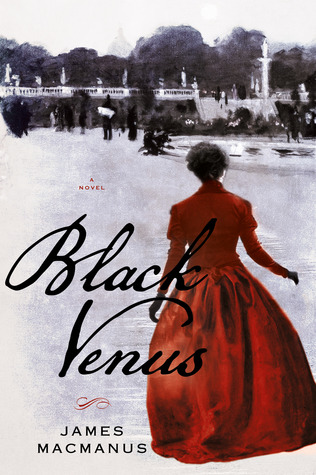
Review: Black Venus by James MacManus

Black Venus
by James MacManus
Release Date: May 7th, 2013
2013 Thomas Dunne Books
Hardcover Edition; 368 Pages
ISBN: 978-1-250-01423-8
ASIN: B009LRWJ4S
Genre: Fiction / Historical
Source: Review copy from Booktrib

3.5 / 5 Stars

Summary
Among the bohemians, the young Charles Baudelaire stood out—dressed impeccably thanks to an inheritance that was quickly vanishing. Still at work on the poems that he hoped would make his name, he spent his nights enjoying the alcohol, opium, and women who filled the seedy streets of the city.

One woman would catch his eye—a beautiful Haitian cabaret singer named Jeanne Duval. Their lives would remain forever intertwined thereafter, and their romance would inspire his most infamous poems—leading to the banning of his masterwork, Les Fleurs du Mal, and a scandalous public trial for obscenity.

James MacManus's Black Venus re-creates the classic Parisian literary world in vivid detail, complete with not just an affecting portrait of the famous poet but also his often misunderstood, much-maligned muse.


My Thoughts
Black Venus is a fictional retelling of the difficult relationship between Charles Baudelaire and the woman he would consider his muse, Jeanne Duval.  A French poet whose work has been critically acclaimed by many others and would influence many generations of artists, he was also known as an essayist, and art critic, and pioneered the early translations of Edgar Allan Poe.  This novel explores the relationship between Baudelaire and Duval, and his inspiration for his most famous, and perhaps his most controversial, piece of work, Les Fleurs du Mal.

What I Liked:  I really enjoyed the atmosphere of this novel, and the descriptions of Paris during Baudelaire's time period.  Baudelaire admired his city very much, every aspect of it, and the author attempted to show the poet's deep love for Paris throughout the novel, which I believe came through rather well.  I loved his interactions with other famous artists during time, and would really have loved to have seen more of this in this novel.  Artists such as Manet and Courbet and Hugo flowed across the page with ease, and I really enjoyed the dialogue and disputes and discussions that ensued. I enjoyed the political discussions and the difficulties of the artists' lives because of these political problems and I thought it was quite interesting and fascinating.  Baudelaire's trial and how it played out was also quite interesting as it really brought to mind the limitations the artists faced during this time period and the struggles they faced against censorship and freedom of expression.  I remember reading that one of Courbet's paintings was not released to the public until 1988, and even Baudelaire's entire collection was not released until 1949.  

Where I Had Some Issues: Personally, while I really enjoyed the bohemian aspect of the novel and delved right into the historical side with no problem, where I had difficulty was believing in Baudelaire and Duval's relationship.  I'm not really sure that the author managed to convey to the reader exactly what kept them together for all of these years and I didn't feel invested in their relationship.  The little something, that little spark, that would have ignited this pair and created these poems, did not really seem to be there for me in this novel and I was disappointed in this. The fact that these two did not belong together and created nothing but trouble for each other came through quite clearly, especially as most of their problems seemed to be solved through a laudanum bottle or opium bottle.  And I did enjoy the scenes where they had difficulty interacting with each other and how issues were resolved, but I'm not sure whether the author wanted to present Duval as a character that I should pity or one that I should like, as for the most part I didn't really like her.  I admired her feistiness and her guts to survive in a difficult world, absolutely, but her basic personality and how she used people, I did not like very much.  But like I said, I do admire those who can survive and she was definitely a survivor.

Verdict
Black Venus was an enjoyable novel in the sense that I really thought the author did a fantastic job with regards to the research and felt really in touch with nineteenth century France.  I enjoyed the atmosphere of the novel, as well as learning more about a city I adore very much, and trying to understand the hardships that people faced with all of the political turmoil that existed during this time period.  That being said however, I still felt like something was missing in this novel, that little something between Baudelaire and Duval that would have really lit up this novel as I didn't really feel a lot of empathy for either character, even knowing how it would end for both of them as I was already familiar with their story.  Despite this, I would recommend this novel to those who enjoy a trip down historical lane and I would definitely read the next novel published by this author.